Get Full Government Meeting Transcripts, Videos, & Alerts Forever!
Get email alerts on the Criminal Justice topic
No spam. Unsubscribe anytime.
Probation officials warn of up to 700 'realigned' prisoners and a potential $4M–$5M midyear hit
Summary
Chief adult probation officer warned the county could receive up to 700 parole‑realigned prisoners and that adult probation may need a $4–5 million midyear supplemental; supervisors and the mayor's office said they will prepare plans and fold state realignment funding into upcoming budget proposals.
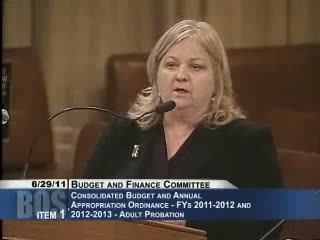
Wendy Still, chief adult probation officer, told the Budget and Finance Committee that state criminal‑justice realignment could substantially increase the city’s probation caseload and budgetary needs.
"We anticipate a significant impact ... that we will have up to 700 realigned prisoners under our now post custody release supervision," Still said, describing the department’s planning and a public input schedule that will begin July 12.
Still told the committee the mayor’s budget did not include new ongoing resources for probation and that revenue from the state is unlikely to match the department’s anticipated expenditures. "I anticipate there could be upwards of a 50% difference between the two figures," she said, and estimated a midyear supplemental of "probably $4,000,000 to $5,000,000." Supervisors described that as roughly a 10% increase over current probation spending.
Greg Wagner of the Mayor’s Budget Office said the city will fold state numbers into a broader fiscal plan and present both policy and funding proposals to the board in the fall after more details are available.
The committee asked the probation department to release a draft realignment plan for public input and to continue coordinating with the sheriff, district attorney and public‑defender offices to shape alternatives and risk‑assessment tools.
Next steps: the department will present a public reentry council hearing on July 12 and return to the board with a funding proposal and operational plan once state allocations are clarified.