Get Full Government Meeting Transcripts, Videos, & Alerts Forever!
Get email alerts on the Balboa Incident topic
No spam. Unsubscribe anytime.
Supervisors hear anguished testimony over Balboa High response; SFPD and SFUSD agree to follow up on MOU revisions
Summary
A Nov. 28 committee hearing on SFPD and SFUSD protocols after a gun discharge at Balboa High School drew extensive family and youth testimony alleging privacy violations, delays in parental access and public exposure of a detained student; SFPD described restraint and pledged follow‑up with the family and youth commission.
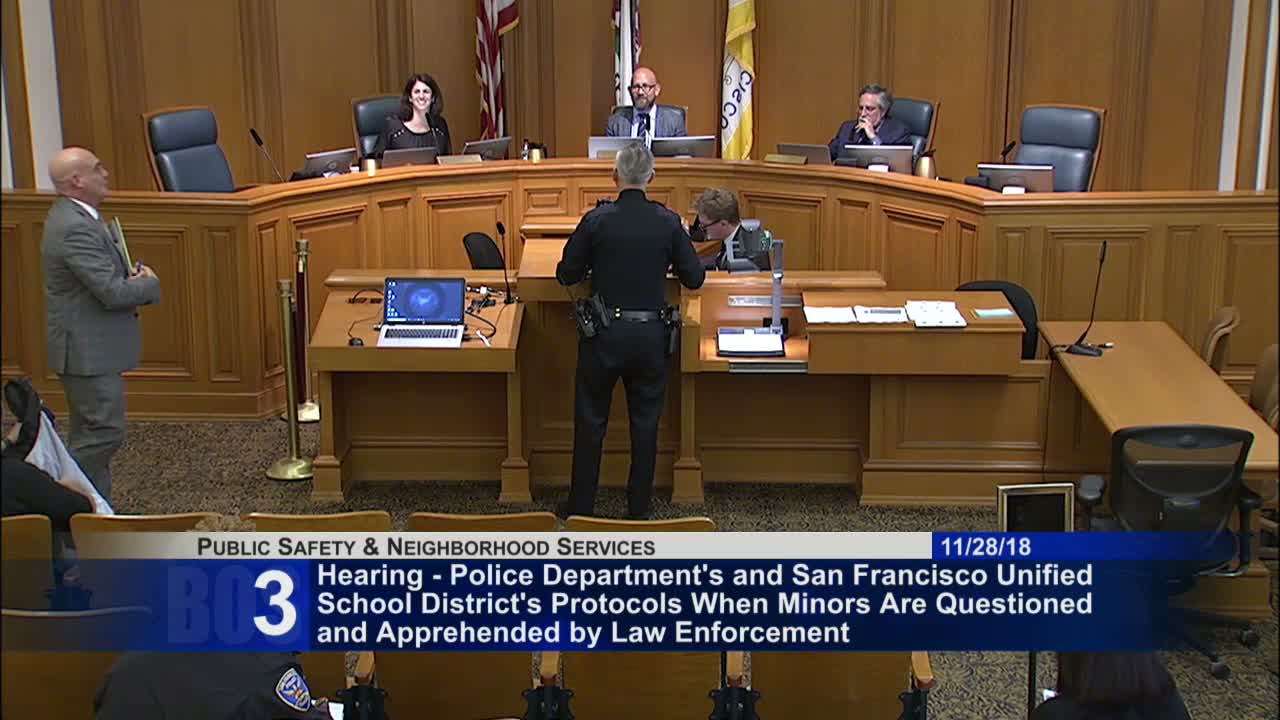
At a Nov. 28 hearing called by Vice Chair Supervisor Ronan, the San Francisco Board of Supervisors’ Public Safety and Neighborhood Services Committee examined police and school district procedures after a gun discharge at Balboa High School and the subsequent detention and release of several students.
The hearing produced emotional testimony from students, family members and youth commissioners alleging that SFPD officers handcuffed a 16‑year‑old, escorted him past members of the media and that parents were not allowed immediate access at Ingleside Station. Vice Chair Ronan read a written statement from the detained student describing being handcuffed, paraded past cameras and held at the station before his father was allowed to be with him.
“Parents need to be with their children in these moments,” Ronan said, apologizing to the Pena family and promising follow‑up. Members of the youth commission and community advocates urged changes to the memorandum of understanding (MOU) between SFUSD and SFPD, expanded officer training on interactions with youth and stronger protections for student privacy.
Commander David Lazar of SFPD’s Community Engagement Division described department policies on juvenile detention, including Mirandizing within 30 minutes of detention, limits on secure detention for younger children, a requirement that questioning be recorded, and the implementation of SB395, which the department says allows youth 15 and under to consult the public defender before questioning. Lazar said officers exercised restraint during the Balboa response, described the exigent circumstances after a gun discharge, and explained that the department had probable cause for arrests but released the youth “in the interest of justice” to reduce trauma.
Patty Lee of the Public Defender’s Office reported that her office fields calls under SB395 and said attorney consultation has improved outcomes; she and others urged expanding consultation to all youth 17 and under. Kevin Truitt, SFUSD assistant superintendent, said the existing MOU focuses on minimizing disruption and protecting student privacy but acknowledged confusion about when the MOU applies to active shooter responses. Truitt outlined planned revisions: clarify the MOU’s scope (distinguishing active‑shooter incident protocols), strengthen timely parent notification, improve interagency information sharing, and develop processes to more quickly remove harmful social media content featuring minors.
Family members and community speakers described perceived failures in communication and safeguards at the station—one parent said he was kept out of the station for a prolonged period—and accused officers of exposed students to media attention. Youth commissioners called for mandatory restorative reentry practices and for widespread training of officers in “policing the teen brain.” Several speakers also cited racial disproportionality in the selection of students for questioning.
Commander Lazar and supervisors agreed to a follow‑up meeting to review body‑worn camera footage and a detailed timeline in a setting that protects the family’s privacy. Lazar noted body‑camera recordings exist but said juvenile confidentiality and Welfare & Institutions Code restrictions complicate public release. The committee voted to file the hearing and directed staff to pursue the promised follow‑up conversations.
The hearing ended with a commitment from supervisors and SFPD to convene a protected timeline review with the family, the youth commission and relevant SFPD and SFUSD officials; the MOU renewal process scheduled for January will incorporate community input gathered in upcoming sessions.
The committee took no formal disciplinary action at the hearing; next steps are the promised follow‑up review and the MOU revision process.