Get Full Government Meeting Transcripts, Videos, & Alerts Forever!
Get email alerts on the Energy Benchmarking topic
No spam. Unsubscribe anytime.
Committee backs amendment to expand building energy benchmarking to some large residential buildings
Summary
After a detailed presentation and questioning, the Land Use Committee voted to forward an amendment aligning local benchmarking with state law so residential buildings of 50,000 sq ft or larger report energy performance to the Department of the Environment; supervisors flagged drafting fixes and discussed audits, costs and potential to capture energy source data.
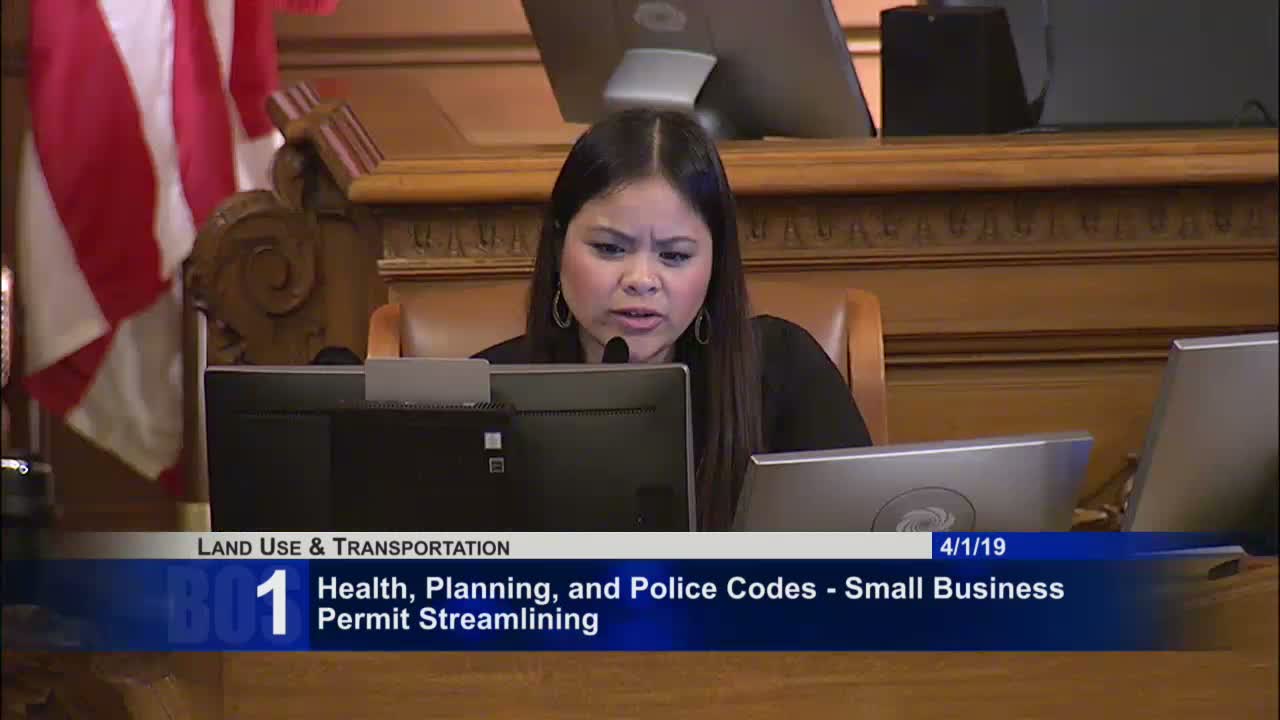
The Land Use Committee on April 1 heard a detailed briefing on an ordinance amending San Francisco’s Environment Code to require annual measurement and disclosure of energy performance for certain residential and nonresidential buildings and to direct the Department of the Environment to collect and publish the data.
Director Raphael of the Department of the Environment told the committee San Francisco’s benchmarking program dates to 2011 and said 44% of the city’s emissions come from existing buildings. He described how the 2017 state law requiring utilities to provide whole-building data eased data collection and said the proposed amendment would align the city ordinance so that residential buildings of 50,000 square feet or greater report to the Department of the Environment rather than reporting only to the state.
Supervisors pressed staff on drafting and scope. Chair Aaron Peskin and Vice Chair Asha Safaei noted the ordinance’s defined term 'Building' (capital B) could be read to require reporting by every structure; Deputy City Attorney Givner agreed the definition should be tightened on the floor or at the next Board meeting so reporting applies only to the intended categories (nonresidential 10,000 sq ft+; residential 50,000 sq ft+). Committee members also discussed audits: the existing ordinance requires different audit levels for commercial buildings (level 1 walkthrough audits for smaller buildings and more comprehensive level 2 audits for larger ones), and the department does not intend to require residential audits when aligning with state reporting.
Ammon Reagan of the Department of the Environment said auditor qualifications and a list of city-approved auditors are posted on the department website and estimated that level 1 audits typically range in the low thousands of dollars and more comprehensive audits cost more. Audit frequency was confirmed as every five years, and building owners will pay audit costs. Vice Chair Safaei asked whether reporting could capture the type of energy used (for example, CleanPowerSF enrollment) to indicate both efficiency and energy source; Raphael said the department and the Public Utilities Commission have been discussing how to coordinate data sets and how that information might be used or woven into policy or recognition programs.
Safaei said she would seek a friendly amendment to add data on energy source and asked to be added as a co-sponsor. The committee agreed to forward the ordinance to the full Board "to be amended" next week without objection.
The committee’s recommended changes focus on clarifying the ordinance’s definitions and on interagency coordination for data and outreach; implementation details — including audit costs and the extent of data-sharing with the Public Utilities Commission — will be addressed as staff and sponsors prepare amendments for the full Board.