Get Full Government Meeting Transcripts, Videos, & Alerts Forever!
Get email alerts on the Climate Emergency Resolution topic
No spam. Unsubscribe anytime.
Supervisors forward climate-emergency resolution to full Board after committee amends text
Summary
The Land Use and Transportation Committee voted without objection March 18 to send a resolution declaring a climate emergency to the full Board with amendments adding just-transition language, clarifying a Department of the Environment technical report, and expanding interagency hearings and budget coordination.
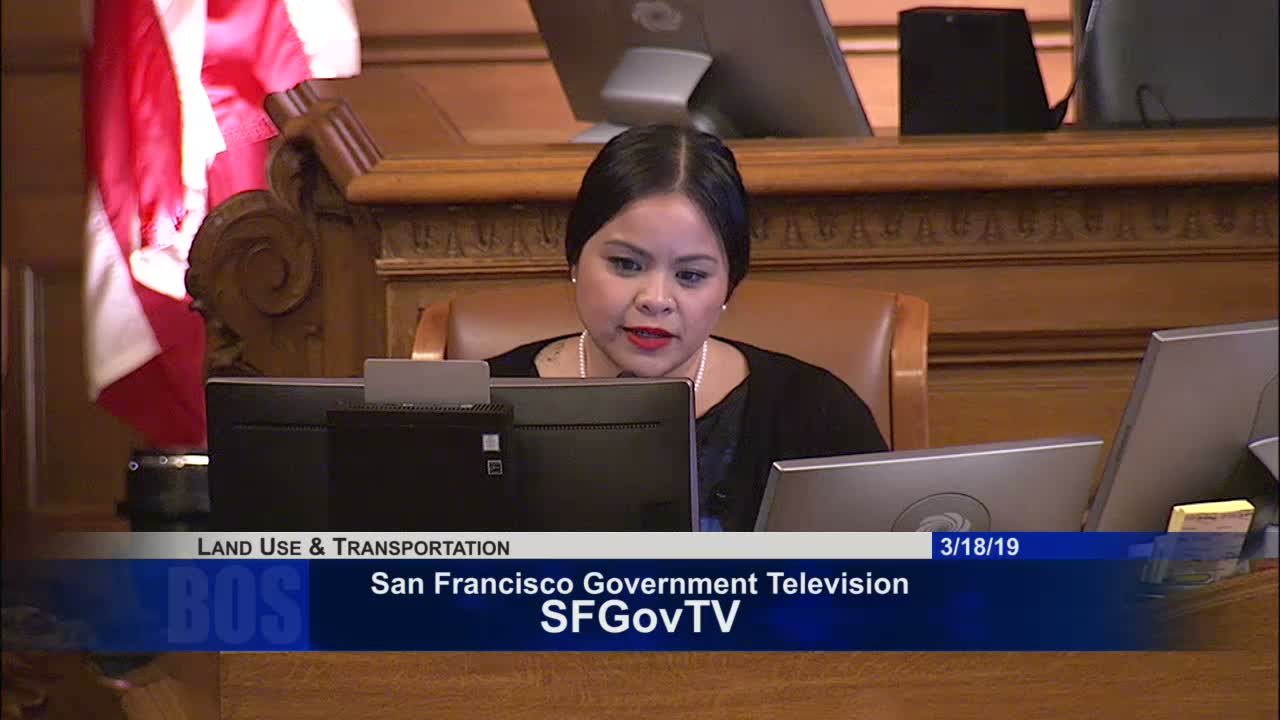
The Land Use and Transportation Committee of the San Francisco Board of Supervisors voted without objection March 18 to forward a resolution declaring a climate emergency to the full Board, adopting a set of amendments introduced by Supervisor Rafael Mandelman.
Supervisor Rafael Mandelman introduced the measure and said it was modeled on declarations from other Bay Area cities. "We're here to talk today about our resolution declaring a climate emergency in San Francisco," Mandelman said, outlining amendments to add just-transition language, clarify the technical report the Department of the Environment will produce, expand the scope of the hearing called for in the resolution to include partner agencies, and coordinate budget priorities with the mayor's office, the controller, and the Capital Planning Committee.
Debbie Rafale of the Department of the Environment told the committee the resolution is primarily about accelerating the pace and broadening the scope of existing city efforts. Rafale cited San Francisco's progress — a roughly 30% reduction in greenhouse-gas emissions since a 1990 baseline — while warning that transportation and buildings remain the largest sources of emissions. Rafale said the resolution calls for a 100-day report and a review of Chapter 9 of the Environment Code to align the city's legal commitments with 2019 realities.
Representatives from the SFPUC, SFMTA, the Planning Department and the Office of Resilience and Capital Planning expressed agency support and outlined how their programs relate to the resolution. John Scarpulla of the SFPUC said, "The SFPUC fully supports this resolution," citing CleanPowerSF, sewer improvements, and water diversification as related initiatives. SFMTA planning director Sarah Jones said the transportation sector accounts for roughly half of the city's emissions and advocated raising the city goal to 80% sustainable trips by 2030.
Multiple public commentators — including members of advocacy, labor and environmental groups — urged swift passage and implementation and stressed equity concerns. Joni Eisen (San Francisco Tomorrow, Citizens' Climate Lobby) highlighted health and mental-health impacts of climate change; Tracy Breager (Jobs with Justice) pressed for labor protections and consultation in the transition; and Victoria Stafford (Bright Line Defense) urged explicit identification of environmental-justice communities such as Bayview Hunters Point.
A member of the public expressed skepticism about labeling the situation an "emergency," arguing the term had been overused and questioning some causal attributions. The committee nevertheless adopted Mandelman's amendments after Vice Chair Supervisor Asha Safaei moved to adopt them; the committee took the motion "without objection," added Safaei as a cosponsor, and instructed Mandelman's office to deliver a redline for clerical purposes.
The committee recorded no roll-call vote and sent the amended resolution to the full Board of Supervisors with its recommendation. The Clerk had earlier announced that items acted on by the committee will appear on the Board's April 2 agenda unless otherwise stated.