Get Full Government Meeting Transcripts, Videos, & Alerts Forever!
Get email alerts on the Vacant Storefronts topic
No spam. Unsubscribe anytime.
Committee advances ordinance to register and inspect vacant commercial storefronts
Summary
The Land Use & Transportation Committee voted Feb. 25 to forward an ordinance requiring owners of vacant or abandoned commercial storefronts to register, pay an initial recovery fee and undergo annual inspections; the committee also set technical amendments on inspections and refunds to ease DBI implementation.
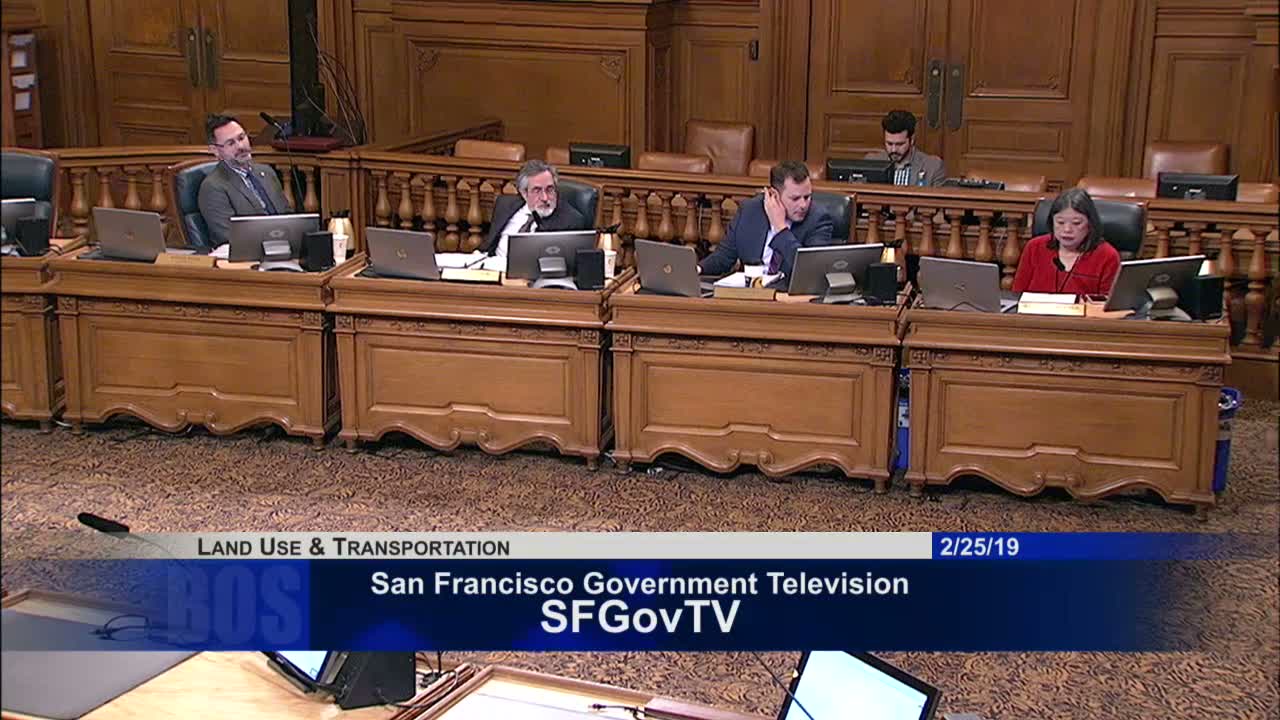
The Land Use and Transportation Committee of the San Francisco Board of Supervisors voted Feb. 25 to forward an ordinance that would require owners of vacant or abandoned commercial storefronts to register them, pay a recovery fee at registration and submit to annual inspections, the committee chair and the sponsor said.
The sponsor, Supervisor Sandra Lee Fewer, told the committee the measure will improve the accuracy and enforcement of the city’s vacant‑storefront registry by ensuring properties are promptly identified and monitored. "This is not a fine. This is rather a recovery fee," Fewer said, adding the fee is intended to cover Department of Building Inspection (DBI) costs for conducting inspections.
Supporters said clearer data and inspections will help curb hazards, nuisance conditions and public‑safety concerns tied to long‑term vacancies. Chair Supervisor Aaron Peskin cited city vacancy data in defending the ordinance, saying the vacancy rate "has jumped 100% from 5% to 10% in the last 3 years," and signaled he will propose a vacancy tax for voter consideration to complement enforcement tools.
Key provisions discussed include a refund mechanism for property owners who lease a property within one year of paying the registration fee and a requirement that annual inspections be performed by a third‑party licensed professional rather than DBI staff, changes the sponsor said will simplify implementation and reduce administrative burden.
William Strawn, speaking for DBI, said the department is "very supportive" and has coordinated with the sponsor’s office to tighten up a complicated situation. In public comment, an unidentified speaker asked where the proposed registration and inspection fees will be earmarked in the city budget and urged the fees be reasonable and focused on public safety rather than punitive enforcement. Corey Smith of the San Francisco Housing Action Coalition said adding housing along commercial corridors would increase foot traffic and help sustain local merchants.
Members of the committee emphasized local impacts. Vice Chair Supervisor Ahsha Safaí highlighted the value of an accurate count of empty storefronts after an inventory in his district identified 156 properties, and Supervisor Matt Haney said the registry will help track locations and durations of vacancies along major corridors such as Market Street. Fewer and other supporters noted letters of support from merchant groups including the Golden Gate Restaurant Association; Chair Peskin also said the Small Business Commission offered recommendations he viewed as weakening the ordinance and registered his disagreement with that commission’s vote.
Supervisor Safaí moved to send the ordinance to the full Board with a positive recommendation; the motion was taken without objection and the item was scheduled to appear on the Board of Supervisors agenda on March 5, per the clerk.
Next steps: the ordinance will be considered by the full Board of Supervisors on March 5, 2019, with implementation details to be coordinated between the sponsor’s office and DBI.