Get Full Government Meeting Transcripts, Videos, & Alerts Forever!
Get email alerts on the Housing Tenants topic
No spam. Unsubscribe anytime.
Hundreds testify on tenant health and alleged abuses by large property managers; departments outline enforcement gaps
Summary
A long hearing focused on tenant health and safety in units managed by large corporate landlords (Veritas, GreenTree, Mosser and others). Tenants and advocates described water/electric shutoffs, prolonged construction, lead and rodent infestations and alleged harassment and displacement. City departments explained enforcement roles and limits; Veritas representatives disputed the characterizations and asked to continue working with the city.
Hundreds of tenants, advocates and community groups told the Public Safety and Neighborhood Services Committee that aggressive renovation and management practices by large property managers and institutional owners have damaged tenant health, safety and the city’s rent‑controlled housing stock.
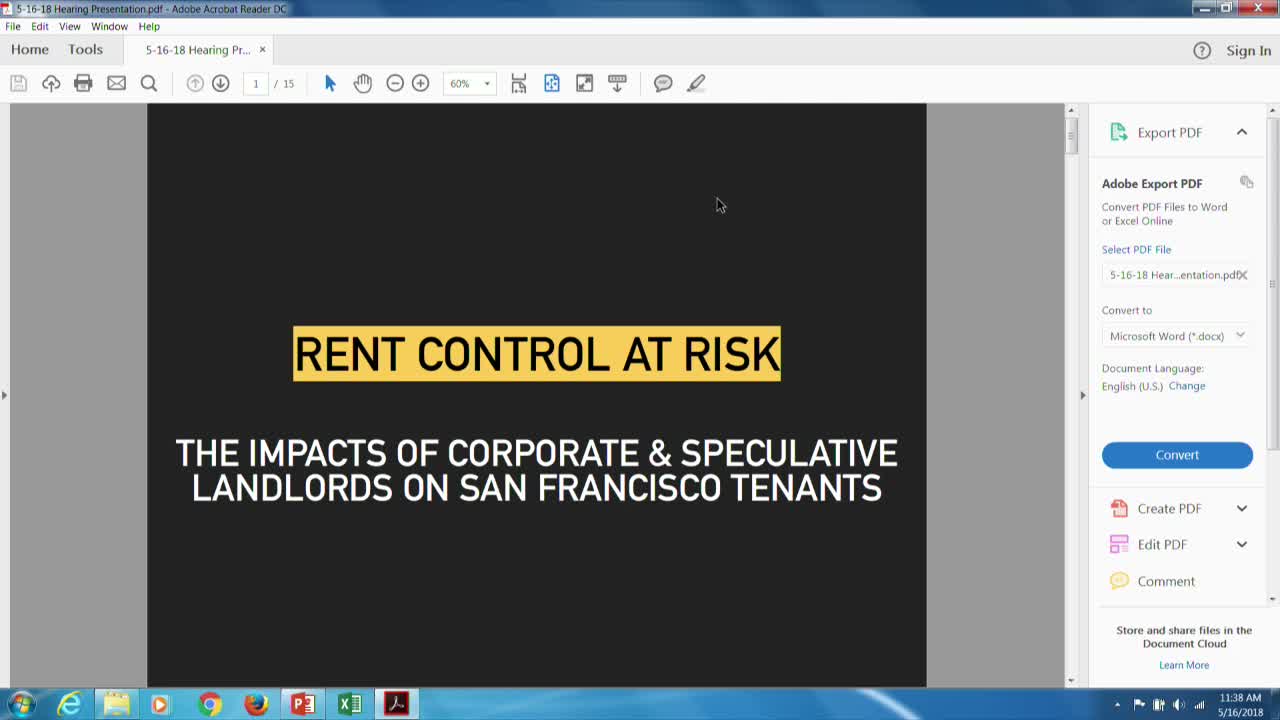
The hearing—called to examine the impact of speculative landlords and large property managers—featured tenant testimony, a detailed presentation by the Housing Rights Committee, and responses from city departments and corporate representatives. Speakers repeatedly named Veritas Investments, GreenTree Property Management and Mosser Properties as examples and described a pattern of behaviors: prolonged demolition and renovation across multiple units leading to dust, rodent infestations, and alleged lead concerns; repeated water and electricity interruptions; rushed or incomplete repairs; frequent notices and automated late‑fee and 3‑day notices; and alleged uses of pass‑throughs and other petitions that increase rent or otherwise put tenants at risk of displacement.
Tenants gave detailed examples. Amina Rubio, a 25‑year tenant, described demolition‑related hazards in her building—reports of sewage in a bathtub cited by DBI, mouse infestations she associated with demolition, cracking ceilings and one incident she described as a lockout while repairs were ongoing. Housing Rights Committee presenters shared an SEC loan analysis and argued owners use pass‑throughs, amortization and debt structures to convert long‑term rent‑controlled units into higher‑rent or short‑term corporate housing.
City agency witnesses described enforcement authorities and limits. Matt Luton of the Department of Building Inspection (DBI) said tenants should report housing code violations to housing inspection services (311 or direct hotline) and DBI will inspect and issue notices of violation with compliance timelines; DBI will issue shorter compliance times for life‑safety hazards. Dan Snyder of the Planning Department said many building permits do not come to planning for review and that planning is oriented toward physical structures rather than occupant impacts. Robert Collins, Executive Director of the Rent Board, explained the mechanics of different pass‑throughs (capital improvements, operating/maintenance petitions, bond measures), noted that some pass‑throughs permanently increase base rent under rent law, and provided recent data on Veritas/GreenTree petitions (59 capital improvement petitions affecting about 1,100 units over three years and 40 O&M petitions involving 552 units; many petitions resulted from changes in ownership and increased debt service/property tax).
Justin Sotto, Veritas’s chief operating officer, responded to allegations by saying Veritas is a long‑term owner that has invested in safety upgrades and that it does not engage in the speculative behavior described; he asked the city to investigate claims if there is evidence and emphasized his company’s willingness to engage and improve communications.
Public comment was extensive: clergy, tenant‑service organizations, legal aid advocates and hundreds of tenants described health harms, harassment and displacement. Advocates urged investigation by the City Attorney, stronger disclosure and environmental testing requirements for demolition work, creation of construction monitoring within DBI, reforms to Ellis Act procedures, limits on conversions to short‑term or corporate housing, and a rental registry to track vacancies and ownership structures.
Committee members thanked presenters and asked departments to provide additional materials. The hearing did not result in an immediate committee vote on enforcement referrals; the committee adjourned after taking the testimonies on record.