Get Full Government Meeting Transcripts, Videos, & Alerts Forever!
Get email alerts on the Skilled Nursing Subacute Capacity topic
No spam. Unsubscribe anytime.
San Francisco supervisors press hospitals as CPMC moves remaining St. Luke—s subacute patients to Davies
Summary
At an April hearing, the city—s Department of Public Health outlined a plan to fill San Francisco—s shrinking supply of subacute and skilled nursing beds while CPMC said it is coordinating a June licensing-dependent transfer of 17 remaining St. Luke—s subacute patients to Davies; families and nurses demanded written plans, staffing protections and a permanent local solution.
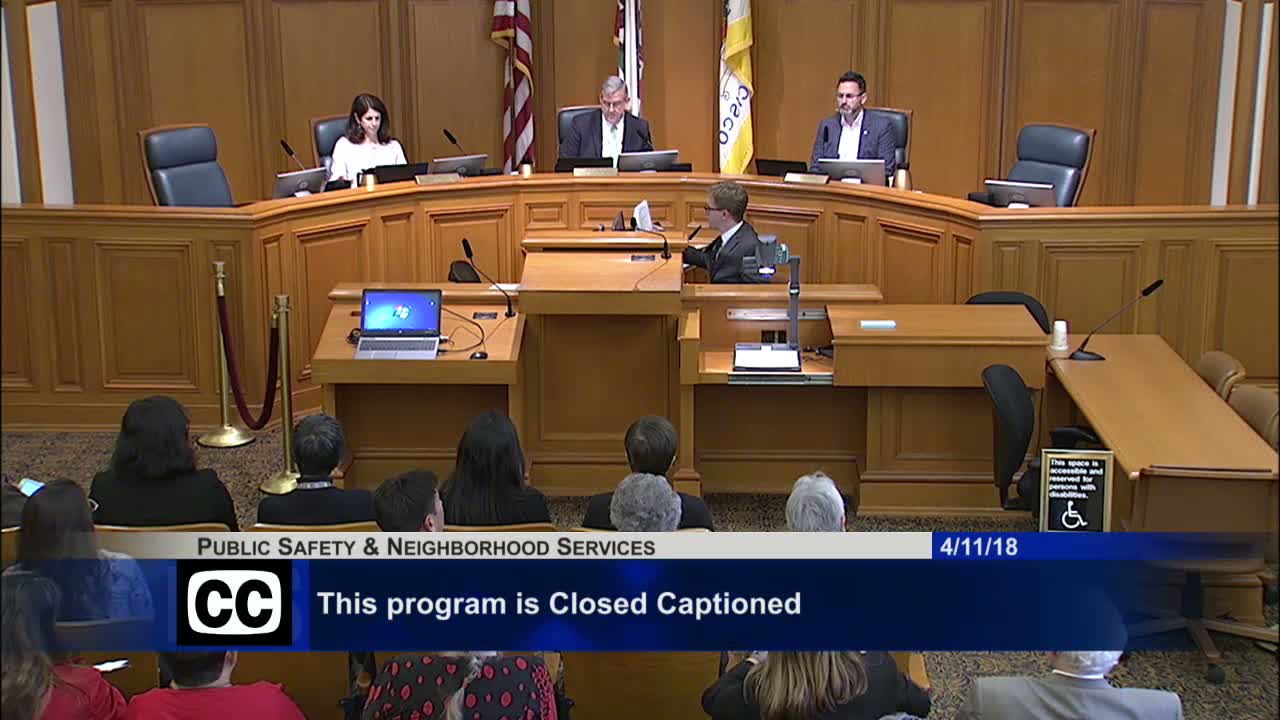
The Public Safety and Neighborhood Services Committee heard testimony on the planned winding down of St. Luke—s hospital—s subacute admissions and the city—s efforts to retain local subacute capacity. Department of Public Health policy analyst Sneha Patel told supervisors the city faces a demographic shift and a shrinking post-acute bed supply: seniors 65 and older are projected to rise from 14 to 21 percent of the population by 2030, about 9 percent of hospital discharges go to skilled nursing facilities and less than 0.5 percent go to subacute beds. "Some patients who cannot be safely discharged home do rely on skilled nursing facilities," Patel said, framing the department—s push to identify unused hospital space and free-standing facility options.
Director of Public Health Barbara Garcia said DPH is pursuing short-term options with St. Mary—s Medical Center and Chinese Hospital, and will pursue zoning and incentive work with city agencies to preserve or create beds. Garcia also agreed to try to provide discharge data showing how many San Francisco residents have been sent out of county for post-acute care during a feasible lookback period; the committee asked for a five-year window if possible.
Representing CPMC, Dr. Browner—who the committee invited to brief members—said CPMC has been working privately with patients and families on individualized move plans and coordinating a move team that includes respiratory therapists and AMR ambulance transport. "Construction at Davies is on track to convert skilled nursing rooms into licensed subacute beds," Dr. Browner said, and the hospital anticipates approvals by OSHPD and CDPH in June, with subsequent DHCS licensing contingent upon that agency's capacity. CPMC reported staff options for the roughly 30 employees on the current subacute unit: some have bid into new positions, others have accepted an enhanced severance package.
Family members, nurses and advocacy groups questioned the speed and transparency of the transition. Raquel Rivera of the St. Luke—s Family Council said families had been given inconsistent information and asked for written detailed move plans and commitments from CPMC before transfers proceed. "This rush move will negatively impact the patients and cause transfer trauma," she said. Jane Sandoval, a St. Luke—s registered nurse and board member of the California Nurses Association, warned that transferring patients to nonunion Davies staff would deprive residents of caregivers who know them best and jeopardize care continuity.
Health advocates and the H2J2 coalition pressed for stronger remedies. Ken Barnes, a physician and long-time St. Luke—s clinician, told the committee, "There is a health emergency in San Francisco, [for] subacute care," and urged CPMC to admit new subacute patients at Davies until longer-term solutions are in place. Coalition representatives recommended a city policy framework to prevent attrition-driven loss of hospital-based subacute capacity.
Advocates and multiple family members described specific local impacts: at the time of testimony CPMC had 17 subacute patients remaining at St. Luke—s, 3 had already moved to Davies and 2 had moved out of county; family speakers said only four rooms at Davies were under construction and raised concerns about activity spaces, oxygen hookups and staff training. One family member, Tony Rivera, cited CPMC—s reported profit figure in urging the hospital to keep beds open.
Supervisors thanked DPH for outlining both short- and long-term options and signaled a willingness to work with hospitals (including UC, Kaiser, UCSF, St. Mary—s and Chinese Hospital), labor and community groups on funding, zoning and licensing questions. Supervisor Ronan moved to continue the matter to the call of the chair to allow DPH to return with additional data and for further negotiations; the motion passed without objection.
What happens next: DPH will follow up with an expanded survey of hospital spaces that might be repurposed for subacute beds, pursue conversations already under way with St. Mary—s and Chinese Hospital, and report on available discharge data. CPMC told the committee it expects licensing approvals in June but said DHCS scheduling will determine patient move timing. The committee signaled interest in possible local legislation to preserve hospital-based subacute capacity and asked staff to continue coordination among hospitals, labor and community advocates.