Get Full Government Meeting Transcripts, Videos, & Alerts Forever!
Get email alerts on the Fur Ban topic
No spam. Unsubscribe anytime.
Committee advances Tang’s ordinance to ban sale and manufacture of new fur products in San Francisco
Summary
The Public Safety and Neighborhood Services Committee voted to send Supervisor Katie Tang’s ordinance banning the sale and manufacture of new fur products to the full Board of Supervisors with a positive recommendation. Tang said the effective date was changed to Jan. 1, 2019 and secondhand sales and restorations are excluded; the Controller and Chamber gave competing estimates of local economic impact.
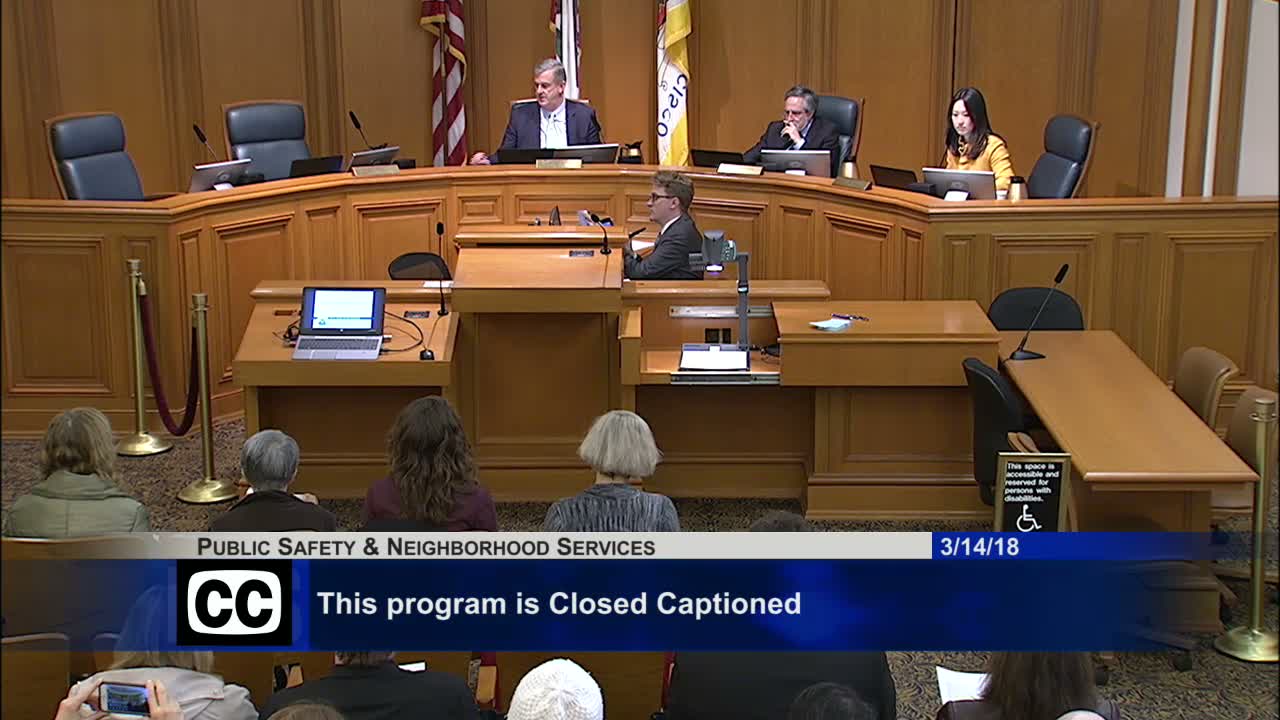
SAN FRANCISCO — The Board of Supervisors’ Public Safety and Neighborhood Services Committee on March 14 advanced an ordinance by Supervisor Katie Tang that would ban the sale and manufacture of new animal fur products in San Francisco, sending the measure to the full Board with a positive recommendation.
Tang told the committee she had revised the ordinance since the last hearing, moving the phase‑in date to Jan. 1, 2019, and clarified that the proposal would not apply to used fur products sold by secondhand shops or to restoration of existing items. "Starting 01/01/2019 in San Francisco, it would be illegal to sell, offer for sale, display for sale, trade, give, or donate a fur apparel product that's new," Tang said during her presentation.
Ted Egan of the Controller’s office presented the office’s review and summarized a report from the San Francisco Chamber of Commerce. Egan said precise local data are not available; he cited the U.S. economic census (2012) figure of $355 million in first sales for the state and an extrapolated San Francisco estimate of about $10.8 million in 2012. The Chamber’s survey — sent to about 50 businesses with nine responses — produced a higher estimate, which the Chamber put at roughly $40 million in annual sales affected.
"We believe that the proposed legislation is unlikely to have a significant economic impact overall using our office's standard guidelines," Egan told the committee, while acknowledging that some retailers could be harmed and that department stores might adapt more easily.
Public comment was sharply divided. Dozens of residents and animal‑welfare activists urged passage, arguing the fur trade is inherently cruel and environmentally damaging. "I wholeheartedly support this ban," said Chin Chi, who identified herself as a San Francisco resident and grandmother. Tiffany Rose, speaking for People for the Ethical Treatment of Animals, cited industry cruelty and international trends and urged supervisors to act.
Retail and business representatives warned of economic harm. Jim Lazarus of the San Francisco Chamber said "this legislation will cost jobs" and could reduce retail visits to the city, and Karen Flood of the Union Square Business Improvement District said the ordinance, as written, would "seriously impact" Union Square merchants. Longtime furrier Benny Lin said the change would put his 35‑year business at South Market at risk.
Supervisors debated the trade‑offs between ethics and economic impact. Supervisor Aaron Peskin pressed for better data and asked whether the ordinance would simply shift purchases online or to nearby jurisdictions; Tang said the city attorney had advised that online sales delivered to San Francisco ZIP codes would be covered. Supervisor Cindy Ronan said she supported moving the item forward and would vote for a positive recommendation.
Ronan moved to send the ordinance to the full Board with a positive recommendation; the chair called for objections and, hearing none, the item was scheduled for the Board meeting on March 20.
What’s next: The ordinance will be considered by the full Board of Supervisors on March 20. If passed, the ban would take effect Jan. 1, 2019, with used fur sales and restorations exempted.