Get Full Government Meeting Transcripts, Videos, & Alerts Forever!
Get email alerts on the Elections Vote By Mail topic
No spam. Unsubscribe anytime.
Rules Committee backs ordinance to expand vote-by-mail for municipal elections
Summary
The committee voted to forward an ordinance directing the Department of Elections to expand vote-by-mail for municipal elections, citing high turnout after universal mailing in 2020 and operational plans to maintain polling places and drop-box locations.
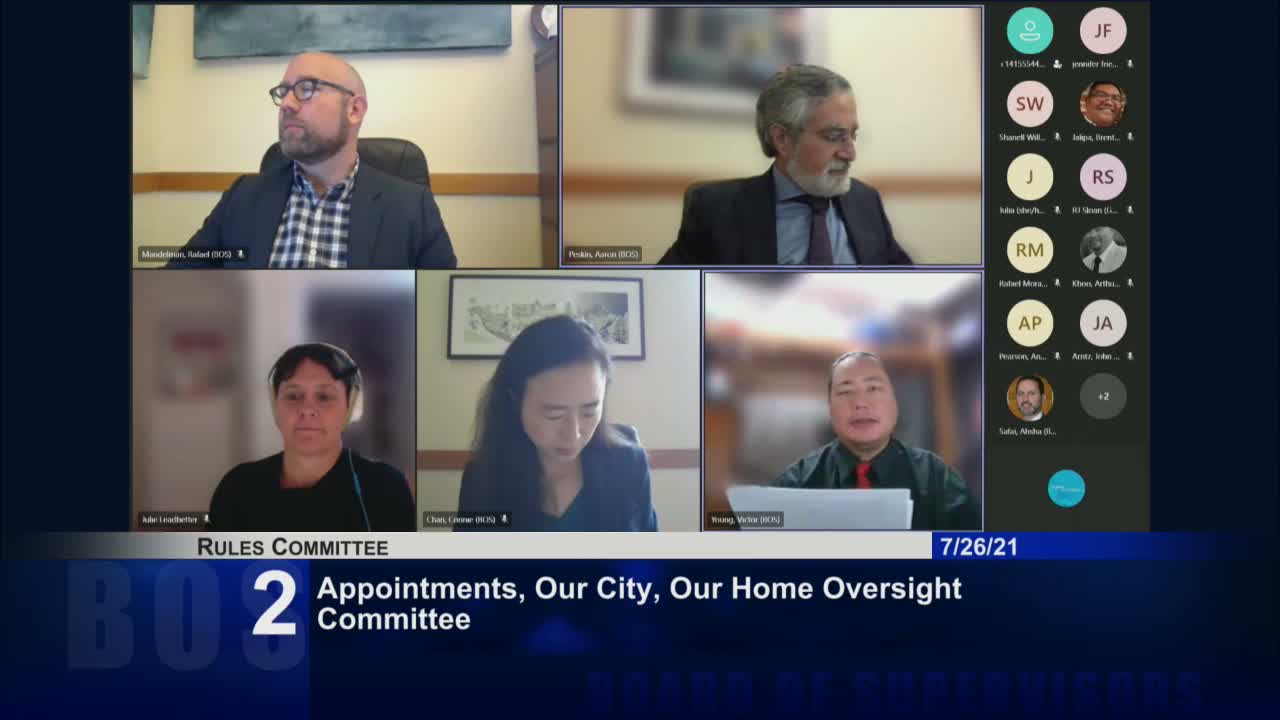
The Rules Committee on July 26 voted to send an ordinance to the full Board of Supervisors that would expand the Department of Elections’ use of vote-by-mail ballots in exclusively municipal elections.
Sponsor Supervisor Safaee framed the proposal as a step to protect and broaden access to voting amid nationwide restrictions, noting that San Francisco mailed a ballot to every registered voter during the pandemic and that turnout in 2020 approached historic highs. Safaee said the ordinance is intended to increase access and equity locally and to serve as a model for other jurisdictions.
Director John Arts of the Department of Elections said the city’s costs for mailing ballots to all voters have been consistent in recent years: an extrapolation for 2016 would have been roughly $1,200,000 and the comparable 2020 figure was about $1,400,000 (both figures exclude postage). Arts said the city will continue to staff neighborhood polling places (about 588) and will provide additional ballot drop-off locations, including one in each supervisorial district the weekend before Election Day.
Supervisor Connie Chan voiced support for the expansion but underscored that in-person polling places and drop-off options must remain available for voters who prefer them. A public commenter criticized local politicians generally but did not address the ordinance’s operational details. The committee voted unanimously to forward the ordinance to the full board for consideration.
Next steps: The ordinance will proceed to the Board of Supervisors for further review and possible final action.