Get email alerts on the Transit Effectiveness Project topic
No spam. Unsubscribe anytime.
SFMTA outlines Transit Effectiveness Project progress, flags staffing and reliability shortfalls
Summary
SFMTA staff told the Government Audit and Oversight Committee the Transit Effectiveness Project has gathered extensive rider data and is preparing recommendations to improve Muni reliability, but singled out understaffed scheduling, roughly 150 operator vacancies and low vehicle speeds as key barriers to immediate service improvements.
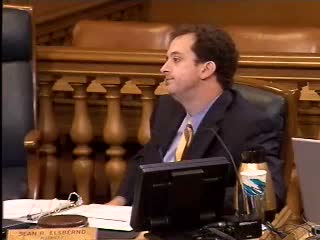
Chair Sean Ellsburn convened the Government Audit and Oversight Committee for an update Tuesday from the San Francisco Municipal Transportation Agency’s Transit Effectiveness Project. Julie Gershbaum, the project’s program manager, said the study has completed market research and an operations review and will present recommendations after a series of public workshops.
Gershbaum said the TEP’s goals are to improve SFMTA performance and long-term financial stability, retain existing riders and attract new ones, and produce a 5–7 year roadmap balancing near-term fixes and longer-term investments. “I’m excited to have an opportunity to update you on the transit effectiveness project because we’ve made tremendous progress since we were last here in April,” she said.
The presentation highlighted outreach and data the agency says shaped its analysis: staff reported more than 3,000 responses to a general rider survey and about 400 responses to a targeted survey of seniors and people with disabilities, which emphasized reliability and the problem of “pass-ups” when riders in wheelchairs cannot board full vehicles. Gershbaum said wheelchair use clusters in the Tenderloin and downtown, and that addressing pass-ups is key to success.
Operational findings identified several near-term constraints: SFMTA said its scheduling unit is under-resourced — roughly four schedulers, currently three after a recent retirement — and the agency has created three new scheduling positions but projects a long‑term need to grow the team to nearly 12. Gershbaum also reported about 150 operator vacancies, a legacy the presentation traced in part to a hiring freeze in 2004. To respond, staff said SFMTA now runs operator training classes every six weeks and is recruiting trainers and new hires to reduce service gaps.
On vehicles and maintenance, staff said light-rail breakdowns have been cut in half and that the agency seeks to expand those maintenance gains to the bus fleet; they emphasized the importance of midlife overhauls to avoid rising breakdowns as vehicles age.
Speed and congestion emerged as a central barrier to improving both service and cost recovery. Gershbaum said many routes run below peer speeds because of traffic signals, stop signs, double parking and sporadic congestion tied to events or collisions. The committee discussed a recently passed bill authorizing front-facing cameras to address double parking; staff said a pilot installation of cameras is underway.
The agency also flagged communications and supervision shortfalls. SFMTA is procuring a new transit radio system, has placed a senior operations manager in central control, and is hiring dedicated announcers so customers receive more frequent, clearer messages during incidents. When asked about real-time messages on stop displays, staff said some signs can show system-wide information but they will follow up on sign-by-sign messaging capability.
Gershbaum framed the service-assessment findings as mixed: Muni is intensely productive and well used, with roughly three-quarters of riders on buses and about 60% of riders concentrated in the urban core, yet system efficiency is low — SFMTA’s fare-recovery ratio averages about 23–24%. Staff argued that speeding service and targeted investments on heavy corridors could induce ridership and improve unit costs.
The presentation included route-level discussion of long lines such as the 29 Sunset, where route length contributes to delays; staff said splitting long routes can create forced transfers for riders and must be weighed against reliability improvements. They recommended tailored service types — for example, more rapid or express choices on high-demand corridors rather than blanket changes across the system.
Gershbaum closed by inviting constituent input at public workshops scheduled in October (Excelsior, Mission, Inner Sunset and a Civic Center session) and said staff will present recommendations and phasing in January, moving toward an implementation plan.
During public comment, a member of the public who said they work at San Francisco General Hospital urged hiring more drivers and maintenance workers instead of managerial hires and suggested Mayor Gavin Newsom declare a state of emergency to force rapid changes to Muni. “Maybe someone higher up the ladder, maybe even Mayor Newsom, could declare a state of emergency for the Muni,” the commenter said.
The committee did not take any formal votes. Chair Ellsburn said the item would be continued to the call of the chair and offered to schedule a follow-up hearing before the end of the calendar year.
AI generated
The text on this page is AI generated. Summaries, highlights, analysis, and video transcripts are all produced from the original source material.
AI can make mistakes, so if you spot one, and we will fix it for everyone.
Note: the source content is unaltered by us. Any content source we link to, be it a video, an audio recording, or a document, is presented exactly as its publisher released it. That publisher is usually a government body, sometimes an individual official or another organisation.