Get Full Government Meeting Transcripts, Videos, & Alerts Forever!
Get email alerts on the Waste Management Contracts topic
No spam. Unsubscribe anytime.
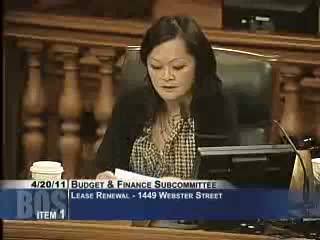
Subcommittee delays decision on 10‑year Recology landfill and facilitation agreements after wide public comment and port‑barging questions
Summary
After extensive questioning and public comment on barging, franchise fees, Yuba County tipping fees and a soon‑to‑expire Union Pacific rail agreement, the Budget & Finance Subcommittee voted to continue consideration of the 10‑year Recology landfill and facilitation agreements to the call of the chair for further review.
The Budget & Finance Subcommittee paused action on a proposed 10‑year landfill disposal agreement and linked facilitation agreement with Recology San Francisco after supervisors and members of the public pressed for more analysis of transportation options, franchise‑fee arrangements and environmental review.
Department of the Environment staff (identified in the transcript as Miss Nutter) urged committee approval, saying the department and review panel concluded the Recology contract is financially and environmentally advantageous and warned of near‑term risks including an expiring Recology‑Union Pacific rail agreement and limited contingency landfill capacity in a large‑scale disaster. Staff said the contract term is 10 years or 5,000,000 tons, whichever comes first, and that the department’s analysis shows potential lifetime savings of about $130 million for ratepayers if the contract is approved.
The department also presented three port‑related transportation options studied with the Port of San Francisco and consultant HDR: (1) an integrated port waste facility (7–10 years; roughly $200M–$400M), (2) a port transfer facility (5–7 years; roughly $100M–$200M) and (3) barging recyclables from Pier 96 as a pilot. Staff reported that current HDR cost estimates show barging is more expensive than trucking today (about $21 per ton versus about $8 per ton for trucking) and that barging scenarios could add between $133 million and $343 million to the 10‑year contract price.
Supervisor Campos and others pressed for broader analysis of the collection and transport pieces of the refuse system, asked the budget analyst to verify a DOE figure that Recology provides roughly $29 million in benefits to the city, and urged more detail about whether a franchise model or competitive procurement would yield better returns. Several speakers raised CEQA/EIR questions and local and regional capacity concerns: Yuba County tipping fees, the adequacy of Ostrom Road and Altamont landfill sites, and whether host fees or tipping‑fee increases in Yuba County would change cost assumptions.
Recology’s group manager, John Legnito, told supervisors the company believes the agreement is a good deal for the city and that Recology had assembled a large number of supporters, but he also asked participants to "fully vet this process." Public comment included labor and maritime advocates urging more study of barging for jobs and port revenue; ratepayer and good‑government advocates urging continuation and an independent review; business groups and several union and small‑business speakers urging approval; and competing vendors arguing transportation and disposal should have been bid together.
Given outstanding questions on franchise fees, comparative benefit calculations, rail‑rate lock timing, and CEQA, the subcommittee moved and adopted a motion to continue the landfill disposal and facilitation agreement to the call of the chair for further review. The chair said it is likely the item will return in July.