Get Full Government Meeting Transcripts, Videos, & Alerts Forever!
Get email alerts on the Pdr Preservation topic
No spam. Unsubscribe anytime.
Committee forwards ordinance to extend PDR preservation pilot, sponsors point to 150 Hooper success
Summary
The Land Use Committee voted to forward an ordinance to the full Board that would remove a sunset on a 2015 pilot preserving production, distribution and repair (PDR) space by requiring one-third of ground floor area remain PDR; sponsors cited the 150 Hooper project as proof of concept.
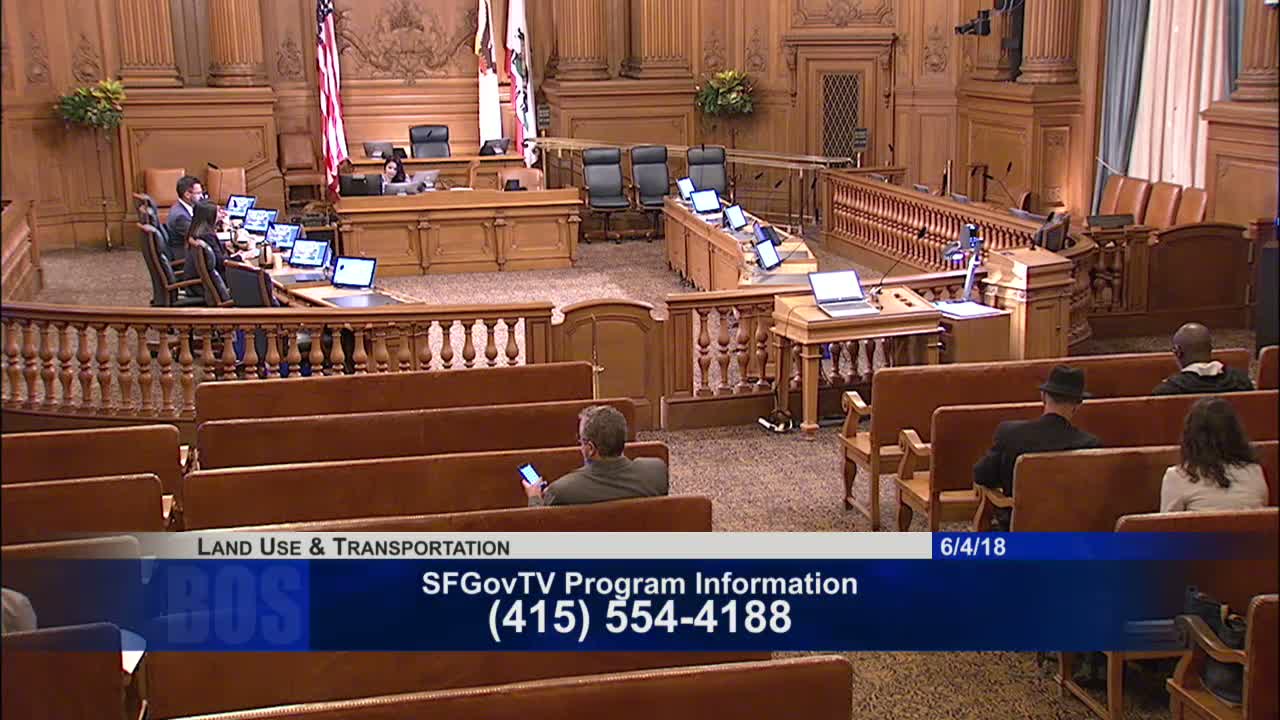
The San Francisco Board of Supervisors Land Use Committee on June 4 voted to forward to the full Board an ordinance that would reauthorize a pilot program intended to preserve permanently affordable production, distribution and repair (PDR) space across the city.
Britney Chiquita, a legislative aide in Supervisor Malia Cohen’s office, told the committee the ordinance removes a sunset provision from a 2015 pilot and relies on a cross‑subsidization model in which one‑third of a ground‑floor building must be preserved as PDR while the other two‑thirds can be used for office or institutional space; residential uses are not allowed. "We know that if we don't assertively build these spaces they'll cease to exist and we want to really preserve as much PDR space as we can," Chiquita said.
Diego Sanchez of the Planning Department reported the Planning Commission unanimously recommended approval after public testimony on May 3. Supporters at the committee meeting pointed to the 100 Hooper campus — specifically the 150 Hooper portion — as an example. Kate Sophus, executive director of SFMADE and a project sponsor for 150 Hooper, described the project as a four‑story, 60,000‑square‑foot building with significantly below‑market PDR space that will house dozens of existing manufacturers. "150 Hooper...will be open later this summer," Sophus said, adding the development guarantees low‑income hiring across much of the building.
Thor Kislovsky, a sponsor for an 1850 Mission nonprofit PDR project, told supervisors he supported the ordinance but asked the committee to consider permitting additional public‑benefit uses such as childcare or affordable housing alongside office to expand community benefits while still incentivizing PDR.
The committee moved to forward the ordinance to the full Board with a positive recommendation. Diego Sanchez made the motion at the committee meeting and the committee carried the motion "without objection," according to the clerk. The committee did not adopt amendments or record a roll‑call vote; the item will appear on the Board of Supervisors agenda for June 12.
Supporters said the reauthorization is intended to preserve scarce PDR capacity on underused sites and enable new construction that otherwise would not be financially feasible. Planning staff told the committee the pilot’s controls require project sponsors to submit business plans and tenant information to demonstrate the space will serve manufacturing and related users and to describe workforce hiring measures.
The full Board will consider the ordinance at its regular meeting; committee staff said items acted on that day would be included on the June 12 Board agenda.