Get Full Government Meeting Transcripts, Videos, & Alerts Forever!
Get email alerts on the Transportation Sustainability Fee topic
No spam. Unsubscribe anytime.
Supervisors forward measure to raise transportation sustainability fee for large nonresidential projects
Summary
At a Feb. 2018 Land Use Committee hearing, members voted without objection to forward an ordinance increasing the Transportation Sustainability Fee by $5 for large nonresidential projects citywide and $2 inside Central SoMa, after staff briefings and public comment about feasibility and funding context.
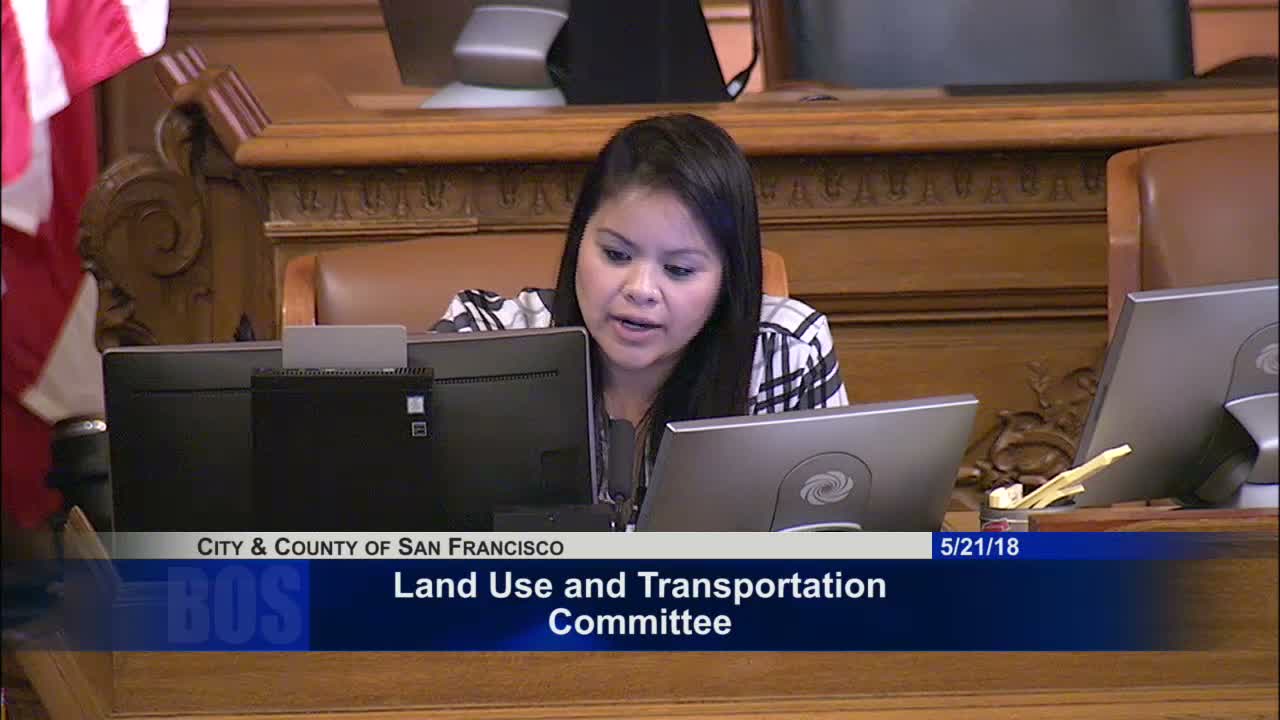
San Francisco supervisors on the Board of Supervisors Land Use Committee on Monday moved to recommend to the full board an ordinance that would raise the Transportation Sustainability Fee (TSF) by $5 for nonresidential projects larger than 99,999 gross square feet, with a $2 increase inside the Central South of Market (Central SoMa) area plan.
The proposal, sponsored by Supervisor Aaron Peskin, won the Planning Commission's unanimous recommendation and was sent to the full board "without objection" after a staff presentation, public comment and questions from supervisors. The committee action directs the item to the full board for final consideration.
Why it matters: The TSF is a dedicated funding source for citywide transportation needs managed in partnership with the San Francisco Municipal Transportation Agency (SFMTA). Supporters said the modest increase will help the agency cover maintenance and system improvements as the city continues to add office space and jobs; critics and some supervisors stressed the need for updated feasibility analysis and broader context for Central SoMa planning and associated fees.
Sponsor and staff remarks Supervisor Aaron Peskin, sponsor of the legislation, described the increase as a "drop in the bucket" relative to overall transportation needs but said it would help the city "plan for the future and not make that same mistake again" as office development has accelerated. He told the committee the Planning Commission had unanimously recommended the TSF increase and that projected revenues were adjusted under the compromise from roughly $23 million to about $12 million.
Diego Sanchez of the San Francisco Planning Department told the committee the Planning Commission voted on May 17 to support the proposed TSF increase — $2 in Central SoMa and $5 elsewhere — and made staff available for questions.
Feasibility and review schedule Several supervisors pressed staff on feasibility. Supervisor Asha Safai asked how much revenue the increase would produce inside Central SoMa and outside; staff responded that the estimate was approximately $11.4 million total, about $8.2 million inside Central SoMa and about $3 million outside.
SFMTA Planning Director Sarah Jones explained that the city conducts a five-year review of citywide fees and that the original TSF ordinance includes a three-year economic feasibility cycle. She said the department has budgeted for a feasibility study and expects that analysis to be completed within the coming year.
Public comment and stakeholder views Public commenters and development representatives generally varied between support for the TSF as a transit funding source and requests that fee levels be considered in the broader context of Central SoMa's comprehensive fee package. An unidentified commenter urged the city to prioritize spending for low-income residents over navigation centers and accused large technology firms of receiving preferential treatment on tax collection. Jeremy Pollock, speaking on his own behalf, urged the board to seek greater transparency in pro formas and profitability assumptions, especially for projects receiving public subsidies.
Developers representing major Central SoMa sites, including Sharon Lai of 1 Vassar, Matt Field of TMG Partners and Mike Rizzo of Kilroy Realty Corporation, said they support transportation investment but asked the board to view the TSF alongside the Central SoMa community benefits and fee package — plans that proponents say will generate large sums for local transportation improvements.
Committee action and next steps Supervisor Jane Kim moved to forward the ordinance to the full Board with a recommendation; the committee agreed to send the item forward "without objection." The item will be considered by the full Board of Supervisors on a future agenda. The SFMTA-planned feasibility study and the broader Central SoMa plan review — scheduled to return to the committee in later months — were cited by supervisors as the next steps for monitoring impact and overall fee coordination.
Authorities and context The measure is an ordinance to amend the Planning Code; committee members referenced prior Planning Commission hearings, a Nexus study used for fiscal analysis, and the city Controller's periodic impact-fee review.
What remains unresolved The committee did not adopt any additional statutory changes to require a formalized fee-specific feasibility review beyond existing review cycles; supervisors said they expect follow-up analyses and comprehensive Central SoMa fee deliberations to inform the full board's final decision.