Get Full Government Meeting Transcripts, Videos, & Alerts Forever!
Get email alerts on the Antibiotics Policy topic
No spam. Unsubscribe anytime.
Committee forwards ordinance requiring large grocers to report antibiotic use in meat
Summary
The committee voted to advance an ordinance that would require grocery chains with more than 25 stores to report antibiotic‑use practices for raw meat and poultry to the Department of the Environment; the department will post results, evaluate procurement, and report back to the Board.
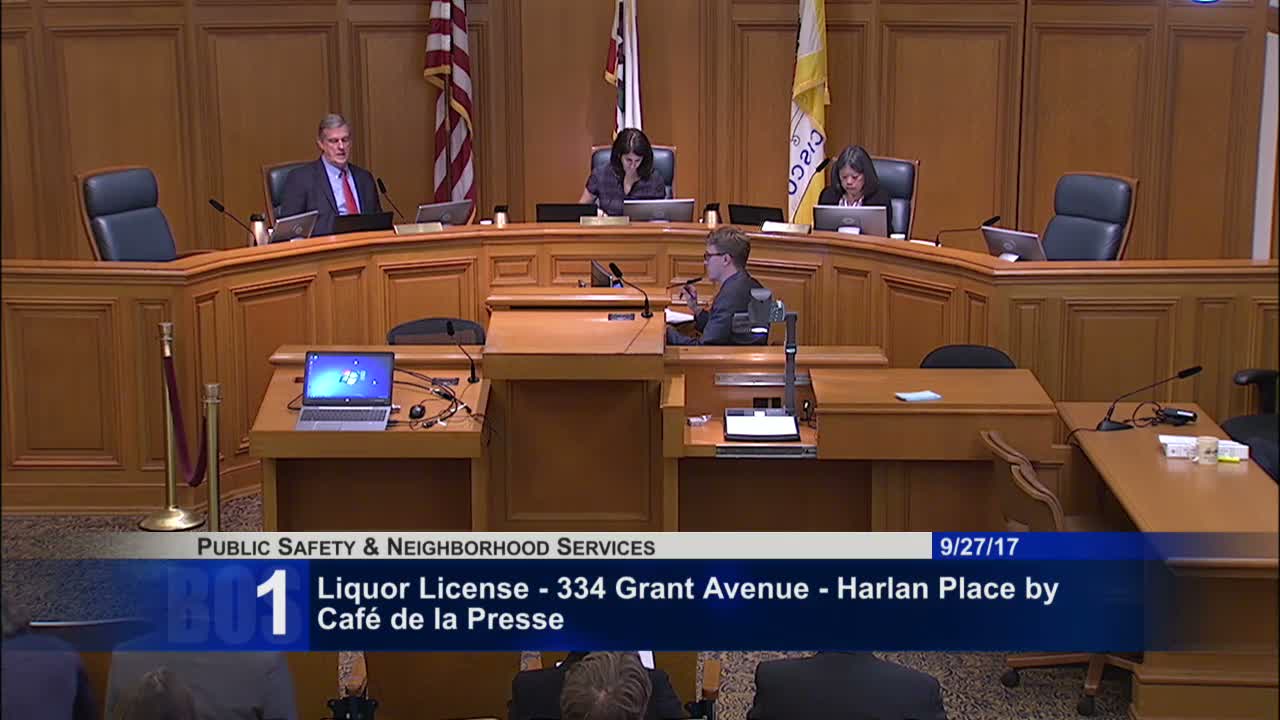
The Public Safety and Neighborhood Services Committee on Sept. 27 advanced an ordinance to amend San Francisco’s Environment Code to require certain retailers to report the use of antibiotics in raw meat and poultry to the Department of the Environment, and to require city departments to report antibiotic use in raw meat and poultry purchased by the city.
Supervisor Wilfred (Sheehy) framed the proposal as a transparency measure aimed at combating antibiotic resistance, saying families “should have the right to know about how the meat they purchase is produced.” Dr. Tomas Aragon, the city’s health officer, described antimicrobial resistance as “one of the largest threats in the world,” outlined surveillance trends showing rising resistance in retail meat, and emphasized a one‑health approach linking human, animal and environmental health.
Avi Carr of the Natural Resources Defense Council reviewed federal and state action, noting federal changes requiring veterinary oversight but leaving disease‑prevention uses allowed; he cited international experience (the Netherlands) and urged local market‑based leadership. Debbie Raffel, director of the Department of the Environment, explained that the ordinance targets grocery chains with more than 25 stores nationwide (about 122 stores in the city’s outreach universe), requires those chains to provide antibiotic‑use information to the department, and directs the department to post collected information publicly and to evaluate city procurement policies (schools, hospitals, jails) to inform future changes. Raffel said the department will perform outreach and publish materials in multiple languages and will implement the work using existing departmental resources.
Industry speakers including Tim James of the California Grocers Association cautioned that grocers may not control supply‑chain producer information and urged partnership language, liability clarifications and clarity about the use of the data. Local grocers and several physicians and public‑health groups voiced support for transparency; speakers emphasized equity concerns so that antibiotic‑free choices are not available only to higher‑income shoppers.
Chair Hilary Ronan moved to send the ordinance to the full Board with a positive recommendation; the motion passed without objection and the committee directed staff to return with a report on outreach and implementation progress. The item will appear on the Board of Supervisors agenda on Oct. 3, 2017 for Board consideration.