Get Full Government Meeting Transcripts, Videos, & Alerts Forever!
Get email alerts on the Federal Budget CDBG topic
No spam. Unsubscribe anytime.
Committee forwards resolution urging Congress to minimize CDBG cuts as city plans for a 30% contingency
Summary
The committee heard Mayor’s Office estimates that San Francisco receives about $22 million in CDBG funds and that federal proposals could range from modest presidential reductions to steep House cuts; the committee filed the federal-impact item and forwarded a resolution urging congressional action to preserve CDBG funding.
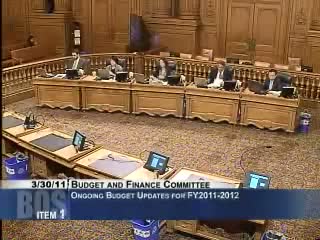
The Budget and Finance Committee considered federal budget uncertainty and its likely effect on local programs, focusing on the Community Development Block Grant (CDBG) program and other federal funding streams that support nonprofit service providers.
Kate Howard of the Mayor’s Office told the committee that San Francisco receives approximately $22,000,000 annually in CDBG funds that support community development, neighborhood programs and workforce development, noting that ‘‘the president proposed in his budget a 7 and a half percent cut to CDBG in year 1…and in year 2…a 10% cut’’ while the House had proposed cuts as large as 62.5 percent. Howard and Brian Chu (Mayor’s Office of Housing) said the city used a 30 percent contingency scenario for planning and emphasized the compounding impact of simultaneous cuts (CDBG, HOME, WIA, and other programs).
Brian Chu outlined national advocacy efforts: the National Community Development Association has lobbied senators and California’s U.S. senators signed a letter seeking to preserve FY2010 funding levels. He said HUD requested the city maintain its timeline and submit an action plan by May 15; the department plans to present either an accept-and-expend resolution or a contingency action-plan submission in April to meet HUD’s deadline and then return for final accept-and-expend approval once allocations are confirmed.
Community speakers described potential harms if deep cuts occur. Malcolm Young (Chinatown Community Development Center) said CDBG and related federal funding help serve roughly 5,000 clients in a sampled set of organizations and warned that a 60 percent cut could remove services for about 3,000 low‑income San Franciscans. Annie Chung (CELFAP for the elderly) said 12 federal programs for elders total roughly $4.8 million and benefit over 3,000 seniors, and she noted a separate $1.6 million state funding risk for a Richmond adult day health care center. John Osaki (Japanese Community Youth Council) said expiring stimulus funds will likely reduce youth employment opportunities by about 1,000 positions.
Supervisor Carmen Chu thanked speakers and asked for cosponsors on the resolution; supervisors agreed to add co-sponsors. A motion was made and the committee, without objection, filed Item 2 (federal impacts) and sent Item 3 (the resolution urging the federal government to minimize CDBG cuts) forward with recommendation to the Board of Supervisors.
Next steps: the Mayor’s Office will submit HUD-required paperwork by May 15 (using a contingency assumption) and return to the Board for final accept‑and‑expend action once allocations are confirmed.