Get Full Government Meeting Transcripts, Videos, & Alerts Forever!
Get email alerts on the Hsa Budget topic
No spam. Unsubscribe anytime.
Human Services Agency outlines targeted cuts as mayor seeks 20% discretionary reduction
Summary
The Human Services Agency outlined a package of proposed reductions, including internal operations savings and contingency proposals that would reduce supportive housing staffing, scale back resource center services and alter cash assistance program rules; department and advocates warned some contingency options would harm vulnerable residents.
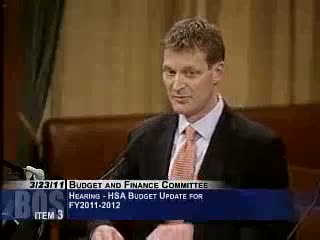
Trent Rohrer, Director of the Human Services Agency, told the Budget and Finance Committee that HSA faces a difficult budget year and is seeking to meet the mayor’s directive to reduce discretionary general‑fund spending by approximately 20% of its discretionary pot (about $18.6 million of a $93.9 million discretionary fund).
Rohrer said the agency’s total budget is roughly $683 million, with about $420 million coming from state and federal sources that the agency leverages. He described guiding principles for cuts — preserve basic human needs, protect programs that leverage outside dollars, meet mandated outcomes and target program effectiveness — and said those limits narrow the agency’s options.
HSA proposed a first 10% tranche of reductions focused on administrative, contract and internal savings and a possible second 10% contingency list that includes deeper program cuts. Contingency proposals would reduce supportive‑housing on‑site staffing, shift a transitional shelter to 15‑hour operations (reducing access to beds for daytime hours), cut resource‑center services by 80% (leaving only core reservation services), and reduce supportive employment overmatches. Rohrer emphasized that the contingency list was presented because there are few discretionary options and cautioned most contingency items would harm vulnerable residents.
Rohrer also described specific policy options such as standardizing group‑home rates after a state court increase, imposing a 30‑day reapplication wait for CAP sanctions in some cases, and limiting the working families credit to first‑time applicants. He noted some savings are ongoing (e.g., dental premium changes for some IHSS provider populations), whereas other concessions are temporary.
Advocates and providers addressed the committee in public comment, urging rejection of contingency cuts and warning that reductions in supportive housing or IHSS would likely increase emergency and public safety costs elsewhere. HSA and the mayor’s budget office said they are continuing to consult with community stakeholders and will refine proposals during the budget process.