Get Full Government Meeting Transcripts, Videos, & Alerts Forever!
Get email alerts on the Pensions Health topic
No spam. Unsubscribe anytime.
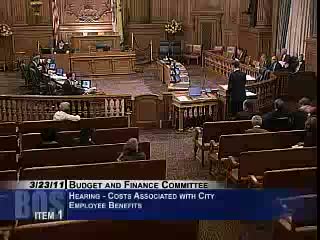
Controller and system directors warn pension, health costs will push city employer contributions higher
Summary
City Controller Ben Rosenfield and retirement and health system directors told the Budget & Finance Committee projected employer pension and health costs will rise sharply over the next several years, driven by 2008 market losses, actuarial smoothing and ongoing medical inflation; short‑term spikes are expected even under optimistic investment scenarios.
City Controller Ben Rosenfield told the Budget and Finance Committee that the city faces a near‑term increase in employer costs for pensions and health benefits, driven largely by losses in the pension fund and continued medical inflation.
"The San Francisco Employee Retirement System is healthier than most, if not, approaching all of our peers in California," Rosenfield said, while cautioning that the city is nevertheless in the midst of a "fairly rapid ramp" in projected benefit costs over the next three to five years. He said combined pension and health costs grew roughly 9% annually during the prior decade, outpacing CPI and likely exceeding revenue growth.
Rosenfield walked the committee through three projection scenarios based on different investment‑return assumptions: a moderate negative, a base case tied to the retirement system's 7.75% actuarial assumption, and a moderately positive case. He emphasized that because the pension fund realized large market losses in 2008 and the plan uses five‑year smoothing of gains and losses, employer contribution rates are expected to rise in the short term regardless of which scenario unfolds.
Gary Amelio, director of the San Francisco Employee Retirement System, amplified those points, describing the five‑year smoothing period and noting the employer contribution rate is set to increase (he cited the near‑term employer rate increasing to about 18.09%). Amelio said the smoothing will extend through fiscal year 2013 and that, while a 28% employer rate is not guaranteed, that outcome is plausible in some scenarios and would be followed by a later decline as markets recover.
Catherine Dodd, director of the Health Service System, said the system has taken steps to control health costs and secured a 3.1% rate increase for the coming year — below the statewide large‑employer average. She pointed to competitive RFPs, changes to co‑pay structures, eligibility audits and pilots such as accountable care organizations and wellness programs as measures intended to limit future health‑care inflation.
Committee members pressed officials on how those cost trajectories compare with revenue growth and sought clarification on the extent to which pension and retiree health costs are legally distinct. Rosenfield said tax revenues grew faster than CPI in the prior decade (roughly 4–6% annually) but that rising benefit costs present a budgetary pressure that will likely continue for the next several years.
The committee held no public comment on the item and procedurally filed the hearing after questions and discussion.