Board hearing lays out allegations of falsified testing at Hunters Point; regulators, Navy and contractors promise retesting
May 14, 2018 | San Francisco County, California
This article was created by AI summarizing key points discussed. AI makes mistakes, so for full details and context, please refer to the video of the full meeting. Please report any errors so we can fix them. Report an error »
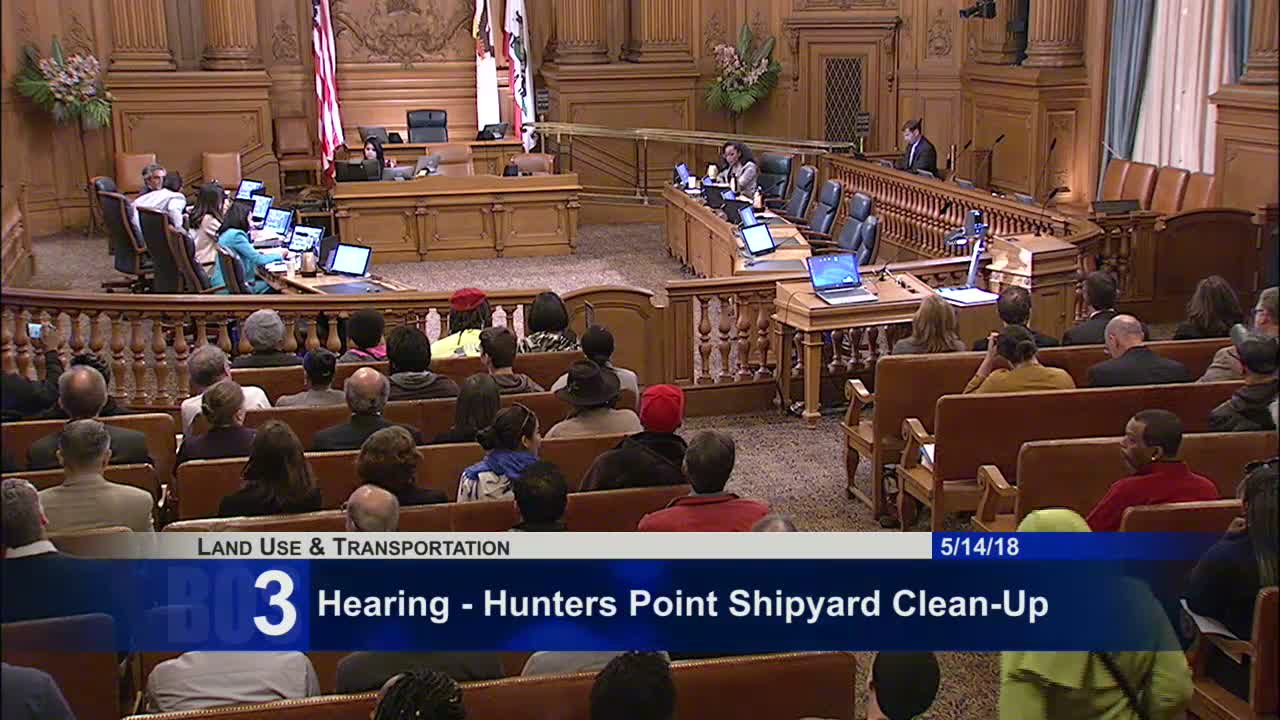
Supervisor Malia Cohen opened the session describing residents oncerns, including expectant families and tenants on Parcel A who have asked whether past tests can be trusted. "Public trust has been completely eroded by a terribly opaque process," Cohen said, and she urged agencies to commit to retesting and fuller transparency.
The Navy told the committee it detected irregularities in radiological data beginning in 2012, performed rework through 2016 and has paused remaining transfers while it prepares a draft work plan for Parcel G retesting. A Navy representative said the work plan would be released for public comment in the coming month and estimated field retesting on Parcel G could take roughly three to six months once the plan is approved.
EPA Region 9 officials said their data evaluation found signs of potential falsification or other data‑quality concerns in locations where Tetra Tech performed radiological work, including Parcel G and other parcels. "We will not approve parcel transfers without comprehensive retesting," EPA eputy Superfund director Enrique Manzanilla told the committee, adding that EPA had assembled national experts to review the work and will closely monitor retesting.
California's Department of Toxic Substances Control (DTSC) confirmed that, because of concerns about data quality, DTSC and state public‑health officials support retesting parcels previously tested by Tetra Tech and said they would work with EPA and the Navy on a regulatory review of the Navy's proposed work plan.
Tetra Tech sent its senior vice president and general counsel, Preston Hopson, who said the firm employs thousands worldwide and that it would cooperate; supervisors criticized the company for not sending a technical lead. The Navy and EPA also said they are examining contractual and investigative remedies; two former Tetra Tech employees have already received criminal sentences related to falsified work.
Whistleblowers and community experts at the hearing described firsthand observations of improper practices, urged comprehensive independent sampling, and asked the board to insist that draft sampling plans be released to the public at the same time they are provided to regulators. Don Wadsworth and Bert Bowers, former radiological workers, testified they had observed problems in site work (they cited Building 322 work on Parcel A) and recommended retesting of Parcel A in addition to Parcel G.
Residents and community groups detailed a long history of worry about health outcomes in Bayview Hunters Point and called for a citizens ommunity oversight body, independent split sampling, and funding for third‑party verification. Several residents reported personal and family illnesses they believe may be connected to site contamination.
Next steps: regulators said the Navy's draft work plan for Parcel G will be released for public comment in the coming weeks; EPA and DTSC will review that plan, monitor retesting and will not approve future parcel transfers until retesting and any required remedial work confirm safety. Supervisors agreed to continue oversight and signaled they will hold a follow‑up hearing; the committee encouraged agencies to provide concrete timelines for the public comment period and the start of field retesting.
The hearing did not produce a committee vote on cleanup policy, but the session generated multiple commitments from agencies to retest and to involve technical and community oversight during rework.
Don't Miss a Word: See the Full Meeting!
Go beyond summaries. Unlock every video, transcript, and key insight with a Founder Membership.
30-day money-back guarantee
Sponsors
Proudly supported by sponsors who keep California articles free in 2025

