Get Full Government Meeting Transcripts, Videos, & Alerts Forever!
Get email alerts on the Public Health topic
No spam. Unsubscribe anytime.
Supervisors send menthol, flavored-tobacco ban to full board after hours-long hearing
Summary
A committee of the San Francisco Board of Supervisors advanced an ordinance to prohibit sale of menthol and other flavored tobacco products, accepting technical amendments and forwarding the measure to the full Board with a positive recommendation after a multi-hour hearing featuring testimony from public-health experts, community advocates and small-business owners.
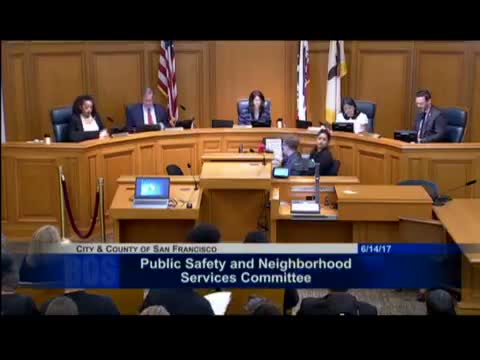
The San Francisco Board of Supervisors’ committee voted without objection on June 20 to forward an ordinance that would prohibit the sale of menthol and other flavored tobacco products to the full Board, following an hours-long hearing that split public testimony between health advocates and small-business owners.
Supervisor Malia Cohen, who introduced the legislation, told the committee the measure is intended to "focus on flavors" because the tobacco industry has targeted young people and vulnerable groups. "The buck stops here," she said, arguing that restricting flavored products would help prevent lifelong addiction and reduce racial and geographic health disparities in the city.
The proposal would amend the city health code to ban retail sales of flavored tobacco and menthol cigarettes; it does not criminalize possession or use. City Controller staff summarized an economic-impact analysis that found three possible consumer responses to a sales ban—reduced initiation (a long-term health and economic benefit), substitution to unflavored products, or increased online purchases—and concluded the office could not produce a single bottom-line economic estimate because the likely mix of those responses is uncertain.
Public-health researchers and clinicians told the committee that flavors—including menthol—make tobacco products more appealing to youth and make quitting harder. Stan Glantz of UCSF cited longitudinal studies and internal industry documents and said flavors are an element of youth initiation and addiction; Valerie Yerger of UCSF described menthol’s anesthetic effect and the industry’s targeting of marginalized communities. Philip Gardner of the African American Tobacco Control Leadership Council urged supervisors to move the measure forward, saying it would not criminalize possession and would help protect communities disproportionately harmed by tobacco.
Supporters submitted letters from health organizations and local coalitions and described local data and national precedents: "Strong laws like the one before you today protect youth from accessing flavored tobacco products," a public-health advocate said. Several speakers cited city figures presented during the hearing, including a claim that tobacco-related health costs in San Francisco amount to about $380,000,000 annually.
Retailers, convenience-store owners and trade groups warned of unintended economic consequences, cross-border shopping to neighboring jurisdictions, increased online purchases and the potential for illicit sales. Multiple store owners said flavored tobacco represents a material share of their revenue and warned the ban could force cuts in staff or closures. Regina (executive director of the Small Business Commission) told the committee she does not recommend approval and raised concerns about online delivery and the need for state-level harmonization to avoid an uneven playing field.
Several witnesses raised the question of e-cigarettes and harm reduction: some vape-shop owners and harm-reduction advocates urged that vaping products and flavored e-liquids be excluded because flavors help adults switch from cigarettes. Public-health researchers countered that flavors also attract youth and that menthol has special properties that strengthen addiction.
After public comment that included both dozens of health professionals, organizers and affected residents and many small-business owners, supervisors accepted three technical amendments designed to clarify the ordinance’s language (including making the presumption that a product is flavored rebuttable and clarifying how packaging and labeling are assessed). Committee members then voted without objection to adopt the amendments and to forward the ordinance to the full Board with a positive recommendation.
The committee did not take a roll-call recorded vote; actions were approved "without objection" and will be considered by the full Board of Supervisors at a later date. The committee also continued a separate agenda item on homelessness services to the call of the chair.
What’s next: The ordinance, as amended by the committee, will be scheduled for consideration by the full Board of Supervisors. If approved by the Board and signed by the mayor, the measure would prohibit retail sales of menthol and other flavored tobacco in the city and county of San Francisco; exact implementation details, enforcement mechanisms and timeframes would be addressed in subsequent administrative work and are subject to legal and regulatory review.