Get Full Government Meeting Transcripts, Videos, & Alerts Forever!
Get email alerts on the Our Children Our Families topic
No spam. Unsubscribe anytime.
Committee reviews Our Children, Our Families progress and draft citywide outcomes
Summary
The committee heard a progress update on the Our Children, Our Families (OCOF) council, including a 19-measure outcomes framework, draft five-year targets (including a proposed child-maltreatment target of 2.5 substantiated instances per 1,000), plans for an online service inventory and a data-sharing agreement targeted for June 2018.
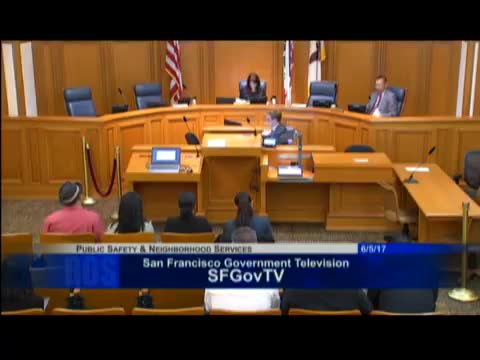
The Public Safety and Neighborhood Services Committee on June 5 heard a progress report on the Our Children, Our Families (OCOF) council and its draft outcomes framework, which the council will use to align city and school-district investments for children, youth and families.
Lori Scolari, director of the OCOF council, told the committee that the council is co-chaired by the mayor and the school superintendent and includes department heads, SFUSD leaders and community representatives tasked with breaking down service silos and focusing investments on the city’s most disconnected children and families. "OCOF is not specifically a program — we're really an initiative that brings together individuals...in a collective impact way," Scolari said.
The council presented a five-goal framework and 19 measures meant to serve as a common "mother board" for citywide objectives such as safe and nurturing environments, economic security and housing stability, health, 21st-century learning, and postsecondary or career success. Simone Combs, a data lead for OCOF, described the working group's approach to benchmarks and targets. "These targets are draft, draft," Combs said, adding they would be refined through strategy sessions and a community engagement process over the summer.
Among the draft targets highlighted, the council proposed a child-maltreatment goal that would aim "to reduce the incidences of child maltreatment to no more than 2.5 substantiated instances per a thousand incidences" over five years, a change staff described as a significant reduction for affected groups. Combs stressed the proposals remain subject to further analysis and community feedback.
Staff also described a phased plan for a citywide service inventory — an online, searchable repository of publicly funded programs for ages 0–24 — and an interactive map to help families find services by neighborhood and need. Luis Oroce described the inventory’s five-year timeline: an activity guide launched in year 1, a back-end/front-end platform in year 2, a comprehensive launch in year 3, assessment and adjustment in year 4, and sustaining the platform in year 5.
Committee members pressed staff on how the council will move from targets to implementation. Supervisor Yee asked, "What's the implementation?" and staff said implementation work groups are forming to devise strategies. On data sharing, staff said the charter mandates data sharing between SFUSD and city agencies and that they are aiming to finalize a formal data-sharing agreement by June 2018, but legal constraints such as FERPA and HIPAA clearance remain the primary hurdles.
Public commenters, including Katie Albright of the San Francisco Child Abuse Prevention Center, expressed support for the council’s emphasis on equity, training and data-driven coordination. Committee members asked staff to return with a shorter presentation and proposed continuing the item to the call of the chair so progress could be demonstrated in about six months; Supervisor Yee made the motion and the chair stated the motion passed without objection.
The committee did not adopt final targets at the hearing; staff described the materials as draft and emphasized further community engagement and technical work would precede final recommendations for the Board of Supervisors.
Next steps: staff expects to continue implementation planning, finalize the data-sharing agreement after legal review, and return to the committee for an update.