Get Full Government Meeting Transcripts, Videos, & Alerts Forever!
Get email alerts on the Landfill Contract topic
No spam. Unsubscribe anytime.
Committee delays vote on 10‑year landfill disposal deal after extensive public comment
Summary
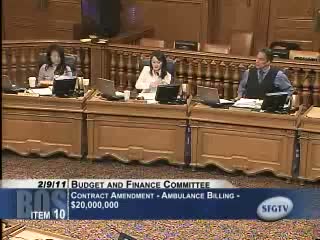
After hours of public testimony and detailed departmental presentations, the Budget and Finance Committee continued a proposed 10‑year landfill disposal and facilitation agreement with Recology so staff can answer questions about transportation, permits and port options. The committee asked for follow‑up and a return in April.
SAN FRANCISCO — The Budget and Finance Committee on Tuesday continued consideration of a proposed 10‑year landfill disposal agreement that would make Recology’s Ostrom Road landfill in Yuba County San Francisco’s primary disposal site, asking city staff for additional analysis before the Board acts.
Melanie Nutter, director of the Department of the Environment, told the committee the panel selected Recology after a multi‑year, public competitive process and that the Recology proposal would cut ratepayer disposal costs compared with the Waste Management alternative and reduce greenhouse‑gas emissions by moving a large portion of refuse by rail. “If approved, this contract will save ratepayers $130,000,000 over the life of the contract,” Nutter said.
The budget analyst’s office agreed the landfill portion of the procurement was competitively solicited, but it flagged policy concerns because the city’s 1932 refuse‑collection ordinance historically has restricted street hauling to a single permitted hauler (Recology). The facilitation/transportation components were not separately competitively bid, and analysts urged the Board to consider whether collection and transportation should be subject to broader competitive review or a voter‑level charter change.
Public testimony filled much of the meeting. Supporters — including business groups, community organizations and many Recology employees — emphasized Recology’s local ownership, diversion record and the price advantage in the staff analysis. “Recology won on cost overwhelmingly,” said Rob Black of the San Francisco Chamber of Commerce during public comment.
Opponents — including speakers from Yuba County and Bay Area environmental groups — raised concerns about permitting, local agricultural impacts and whether Ostrom Road has all permits needed for the proposed pattern and volume of disposal. Several speakers asked that the city verify permits and Yuba County host fees before the Board acts. “Until that issue is settled in a transparent public way, I have to stand in opposition to the contract as currently structured,” said Gary Wolf of the Alameda County Waste Management Authority.
Members also pressed staff on alternative transportation arrangements and the possible role of the Port of San Francisco in a barging or port‑based transfer option. Some supervisors urged broader study rather than immediate approval. Supervisor Mark Mercarimi moved to continue the item to allow further exploration of port options, a LAFCO review and additional work by the department and staff; the committee agreed to continue the item to the call of the chair, with an expectation of returning in April and with interagency follow‑up.
What’s next: the committee asked the Department of the Environment to return with additional written material addressing transportation options (including port/barge feasibility), clarity on county host fees and permits, and a breakdown of the projected annual cost components for refuse collection, transportation and disposal for review before the Board considers final approval.
Provenance: Department presentation and initial discussion (Item 11), SEG 2732–SEG 3162; Budget Analyst policy framing and rate impacts, SEG 3170–SEG 3360; extensive public comment and rebuttals, SEG 4748–SEG 6751; committee motion to continue and instructions for staff, SEG 6912–SEG 7073.