Get Full Government Meeting Transcripts, Videos, & Alerts Forever!
Get email alerts on the City Budget topic
No spam. Unsubscribe anytime.
Controller: Six-month report shows $89.2 million general fund ending balance, but next-year shortfall remains
Summary
The Controller’s six-month report projects an $89.2 million general fund ending balance, reflecting improvements from earlier estimates driven by property, payroll and transfer tax gains; officials warned of continuing uncertainties from property tax appeals, hospital revenue shortfalls and a large projected shortfall next year.
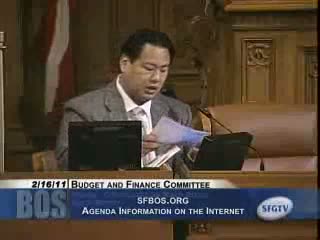
The Budget and Finance Committee on a routine hearing heard a six‑month update from the Controller’s Office showing an updated general fund ending balance of $89,200,000.
"This represents about a $14,000,000 improvement from the assumptions in the mayor's office deficit projections," said Leo Levinson, director of budget and analysis in the Controller’s Office, summarizing the report. Levinson credited stronger-than-expected property tax receipts (about $35 million above budget) and gains in payroll and transfer taxes for the improvement.
Levinson cautioned that the figures remain projections and include risks: lingering volumes of property tax appeals that the city is reserving for, unresolved state budget actions and the potential cost of a special election. "These still include basic assumptions about property tax appeals," he said, adding that the office will continue to update its models.
Committee members pressed staff on the make-up and durability of the gains. Chair Carmen Chu and others noted roughly $9.6 million of the revenue improvement flows through baseline transfers to agencies including the Municipal Transportation Agency and the library. Levinson said the six‑month report treats some previously "uncertain" state and federal revenues as known, but that hospital-related revenues and other department shortfalls remain material drivers of spending pressures.
Officials identified several anticipated supplemental appropriation requests that could be brought back to the committee in March, including from Public Health (discussed as a roughly $14.6 million net need across funds), the Sheriff’s Office (projected salary overspending), Public Works and the City Administrator’s office (litigation-related costs). Greg Wagner, the mayor’s budget director, said the mayor’s office expects to present supplementals to the committee in March and that some uncertain revenues had been finalized in the six‑month assumptions.
Public comment included calls for audits of hospital financial practices; a member of the public said the Board previously declined to hold hearings into perceived misuse of Medi-Cal funds and asked the Controller’s Office to pursue follow‑up audits.
The committee filed the item by unanimous consent. The Controller said the present-year surplus could mitigate some of next year’s projected shortfall, but reiterated the city still faces an estimated shortfall above $300 million for the following year and that a joint estimate with the mayor will be produced in March.
Next steps: staff will return with supplementals and updated modeling; the Controller’s Office will continue monthly updates as the city monitors appeals, state actions and any costs associated with a potential special election.