Get Full Government Meeting Transcripts, Videos, & Alerts Forever!
Get email alerts on the Educator Housing topic
No spam. Unsubscribe anytime.
Hundreds testify on educator housing crisis as city and school district outline multi‑pronged plan
Summary
Dozens of teachers and paraprofessionals described evictions, homelessness and long commutes at a packed committee hearing; city and SFUSD officials outlined a working‑group strategy (counseling, homeownership assistance, rental subsidies, and a proposed brick‑and‑mortar pilot on district land) but acknowledged major funding and legal challenges and a multi‑year timeline.
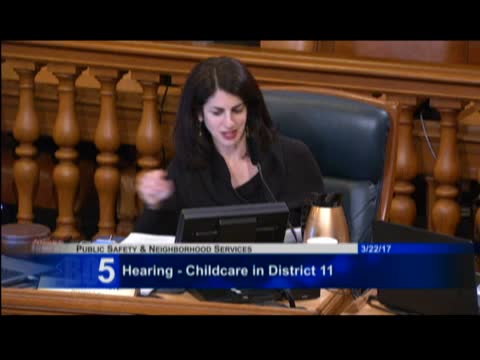
An overflow crowd filled the hearing room March 22 as the Public Safety & Neighborhood Services Committee took up Item 6 on city and school district plans to create affordable housing for educators.
Chair Supervisor Ronan described the staffing crisis—teacher vacancies rose to nearly 38 on the first day of the school year and SFUSD projects hundreds of credentialed vacancies—linking retention problems directly to San Francisco’s high housing costs. "The affordability gap for a first‑year fully credentialed teacher is about $16,000 a year," Ronan said, citing the Budget and Legislative Analyst’s analysis.
The hearing produced sustained, emotional public testimony from teachers, paraprofessionals and union leaders. Commenters described evictions, studio rentals consuming most of their pay, multi‑hour commutes, homelessness and staff shortages at high‑need schools. United Educators of San Francisco leaders and dozens of classroom educators urged immediate action across several fronts: rent stabilization and eviction defense, rental subsidies and landlord incentives, expanded homeownership assistance, and large‑scale brick‑and‑mortar housing targeted to educators.
Severn Campbell of the Budget and Legislative Analyst presented staffing and salary data, noting SFUSD is the seventh‑largest district in the state with 58,000 students and roughly 3,300 teachers. Entry pay for a teacher with a bachelor’s degree begins near $50,000; after accounting for market rents the BLA estimated a roughly $16,000 annual affordability gap for entry teachers and a $6,000 gap for senior teachers to afford a market‑rate studio.
City housing staff and the mayor’s office described a working‑group strategy with four prongs: (1) homeownership assistance (teacher next‑door and down‑payment loans); (2) housing counseling and eviction prevention clinics; (3) a possible rental‑assistance subsidy pilot; and (4) a brick‑and‑mortar pilot to develop rental units on school district land under a recently passed state law (SB 1413) enabling educator housing on district property. Officials said the city has replenished down‑payment assistance funds and allocated some bond proceeds toward educator housing work.
But city and district staff acknowledged constraints: federal low‑income‑housing tax credits typically serve lower income bands (up to ~60% AMI), while many teachers fall above that threshold; that gap means the city must identify subsidy sources to finance rental units affordable to teachers. Officials said legal and fair‑housing questions remain about restricting units to educators, and that a first bricks‑and‑mortar RFP would likely take several years—city staff estimated an RFP and project selection this year with delivery of units in a multi‑year timeframe.
On numbers, housing counseling and eviction‑prevention clinics have helped hundreds of educators with information and casework; officials reported roughly 146 educators have used counseling or eviction support and 12–16 households have received down‑payment assistance tied to teacher‑targeted programs since funds were added. But rental‑assistance and large‑scale housing construction are not yet in place and will require additional funding decisions and interagency agreements.
Supervisors pressed for concrete short‑term steps while the district and MOHCD develop a pilot project. Chair Ronan said the committee will continue the item to the call of the chair and requested regular progress updates and clearer metrics for how the working group will reach the city’s stated stabilization goal for educators.