Get Full Government Meeting Transcripts, Videos, & Alerts Forever!
Get email alerts on the African American Reparations topic
No spam. Unsubscribe anytime.
Rules committee advances ordinance to create African American Reparations Advisory Committee and extends African American Arts & Cultural District committee
Summary
The Rules Committee voted to forward an ordinance establishing a 15-member African American Reparations Advisory Committee (to be housed under the Human Rights Commission) and separately approved amendments to extend and resize the African American Arts & Cultural District advisory committee.
The Rules Committee on Nov. 30 advanced an ordinance to create an African American Reparations Advisory Committee to advise the Board of Supervisors, the mayor and the Human Rights Commission on a citywide reparations plan and associated institutional reforms, and approved amendments to the African American Arts & Cultural District advisory committee that change its membership and extend its sunset and reporting deadlines.
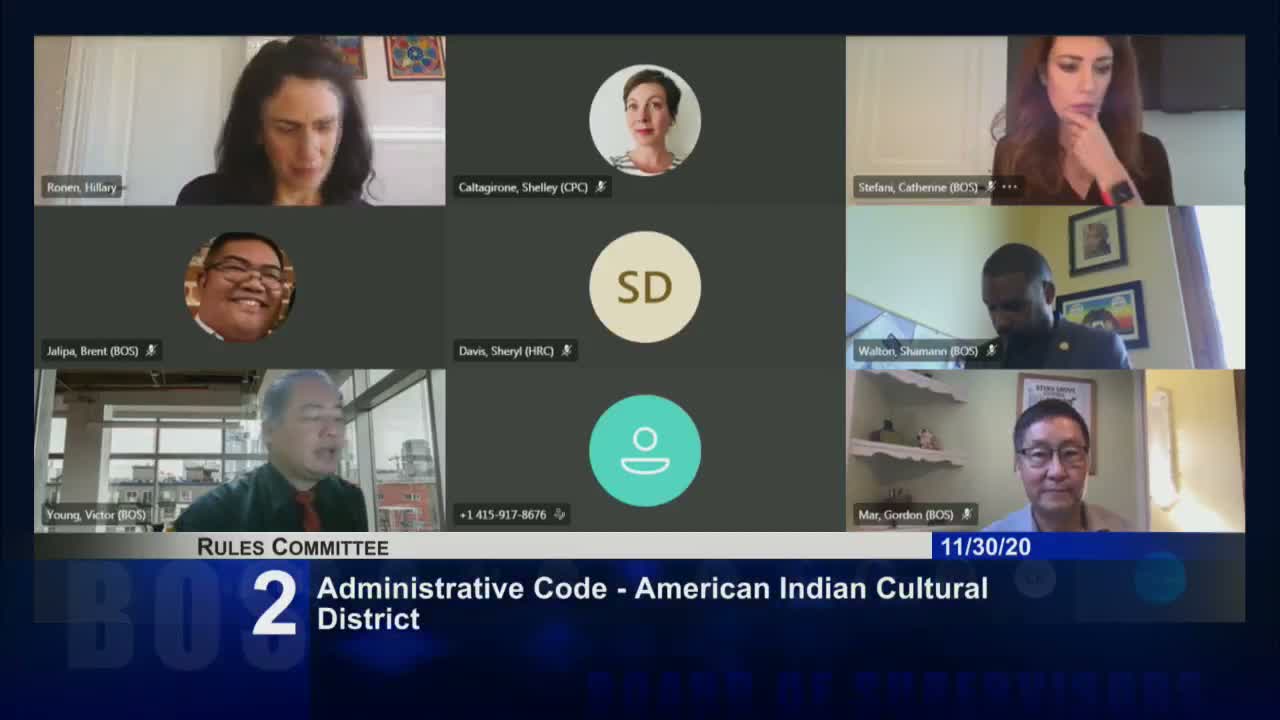
Supervisor Shamann Walton introduced the reparations ordinance and described it as a response to long-standing structural inequities in San Francisco. Walton called for a committee that would "develop and implement a reparations plan" and said the advisory committee would be housed under the Human Rights Commission. Director Cheryl Davis outlined the committee's intended scope and design: 15 members with diverse expertise and lived experience, community engagement to surface priorities (housing, economic development, justice reform, education), and a focus on creating transformational, not merely transactional, changes.
Director Davis cited community engagement that included dozens of meetings and referenced themes such as culture, economic justice, accountability, housing and gentrification. She said the advisory committee should start with facts, assemble a diverse membership that includes people closest to the problems, and design short-term support and longer-term transformational goals.
The committee heard extensive public comment from community groups and leaders, including representatives of SF Black Wall Street, NAACP San Francisco, Rafiki Coalition for Health and Wellness and local clergy and neighborhood advocates, who urged immediate formation of the advisory committee, recommended that funds be redirected to community investment, and offered priorities such as housing, jobs and health equity.
Separately, the committee addressed item 4, an ordinance to modify the African American Arts & Cultural District advisory committee. The amendment extends the advisory committee's sunset to January 2023, moves reporting deadlines for departmental cultural-attribute reports to July 2021, and reduces and reconfigures membership from 15 to 7 (adding seats for a local business owner, a nonprofit employee, a history/culture expert, a youth aged 14'24 and three at-large members). Many callers representing the cultural district and local schools supported the change and urged continued resources for Bayview'Hunters Point and other neighborhoods.
Committee action and next steps: The committee voted to forward the reparations ordinance to the full Board as a committee report with positive recommendation and similarly forwarded the cultural-district amendments. Both items were passed "without objection" and will proceed to the full Board for further consideration.