Get Full Government Meeting Transcripts, Videos, & Alerts Forever!
Get email alerts on the Broadband topic
No spam. Unsubscribe anytime.
Supervisors hear broad support for municipal fiber plan to close San Francisco’s digital divide
Summary
Supervisors received survey results and community testimony urging a citywide municipal fiber network prioritizing equity and an open‑access utility model; staff said consultants will finalize cost and subsidy recommendations and the committee continued the item for further work.
The Land Use Committee held an extended hearing on Aug. 31 to review work toward a possible citywide municipal fiber broadband network aimed at closing San Francisco’s digital divide.
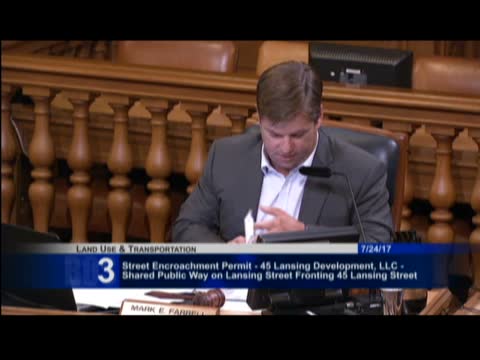
Supervisor Mark Farrell opened the hearing by reciting city data assembled for the project: "Over 100,000 San Francisco residents still don't have Internet access at home," he said, and he noted disparities among students and communities of color. Farrell said the project’s guiding principles are to treat high‑speed Internet as an essential utility, to pursue a model that reaches 100% of residents and businesses, and to create an open‑access network that allows multiple service providers to lease city fiber.
Former Supervisor Eric Marr presented survey results gathered by a community coalition, saying more than 1,000 respondents (including translated surveys) underscored cost as the principal barrier and that low‑income households, seniors and communities of color are most affected. Marr highlighted that digital‑literacy services and affordable monthly service are priorities for many respondents.
Jay Nath, interim project director and Chief Innovation Officer in the Mayor’s office, described progress to date: a financial analysis by the Budget and Legislative Analyst, a CTC Technology contract to refine models and costs, and work by a Blue Ribbon panel and community advisory coalition. Nath said the consultant's final report will provide cost estimates and recommendations, including options for subsidies targeting low‑income households.
Community speakers—representing small ISPs (MonkeyBrains), Public Net SF, youth and senior groups, housing and tech‑access nonprofits—largely supported a municipal fiber effort or urged targeted actions (e.g., pulling fiber to affordable housing building entry points, Dig Once conduit practices, and digital‑literacy funding). Preston Ray of MonkeyBrains recommended city policies to ensure multiple providers can deliver service to affordable housing and urged the city to mandate conduit/wiring during renovation of public housing.
After questions and discussion, the committee continued Item 7 to the call of the chair to allow completion of consultant work and further community engagement.
The City will receive the consultant report and policymakers will consider design, subsidy and governance options in coming months; no final procurement or financing decision was made by the committee.