Get Full Government Meeting Transcripts, Videos, & Alerts Forever!
Get email alerts on the Alcohol Fee topic
No spam. Unsubscribe anytime.
San Francisco committee hears hours of public comment on proposed alcohol fee; measure sent to full board without recommendation
Summary
A supervisor-sponsored ordinance to impose a fee on alcohol wholesalers to fund treatment and prevention drew hours of public comment Tuesday from small-business owners who warned of job losses and public-health advocates who said dedicated funds are needed; the Budget and Finance Committee voted to send the item to the full Board for Sept. 7 without recommendation.
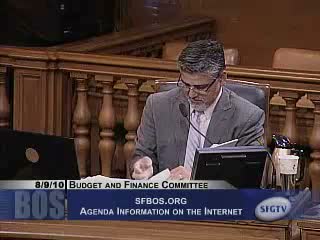
SAN FRANCISCO — The San Francisco Board of Supervisors’ Budget and Finance Committee held a second hearing on an ordinance that would charge alcohol wholesalers a per‑gallon fee to help pay for alcohol‑related health and administration costs, heard more than two hours of public testimony and voted to forward the measure to the full Board on Sept. 7 without a recommendation.
Supervisor John Avalos, chair of the committee, said the proposal includes lower rates than previously proposed and is split by beverage type: “35¢ a gallon” for beer, “a dollar” for wine and “$3.20 a gallon” for spirits, figures he said would translate into only a few cents per typical serving. Avalos said the changes respond to an economist’s updated report and that the committee is working on a schedule to consider first reading Sept. 7 and a possible second reading Sept. 14 to address the city’s timeline before the November ballot measure known as Proposition 26.
The committee heard a presentation from Ted Egan of the Controller’s Office, whose revised calculations estimate roughly $16 million in first‑year fee revenue under the lowered rates but stressed uncertainty. Egan summarized expected consumer price impacts as “about 3.3¢ increase for a 12 ounces of beer, 4.7¢ increase for a glass of wine” and projected a decline in spending at alcohol‑selling establishments totaling about $13.6 million under baseline assumptions. He said the model’s net job impact is small in the baseline but could reach “less than 50 jobs net” under extreme price‑sensitivity assumptions.
Public comment produced a sharp split. Small‑business owners, venue operators and bar managers warned the fee — even if charged to wholesalers — would be passed down and could magnify into tens of cents per unit or higher, squeezing already thin margins and prompting layoffs. Summer Peterson, owner of Mini Bar, said an extra quarter per drink in her calculations would force cutting “35 hours of payroll a week,” and other owners gave similar estimates of diminished staffing, reduced benefits and the threat of closures.
“Two thirds of the bar business is in a tenuous position,” said Doug Dalton of Future Bars, adding the ordinance could force closures and lost shifts. Several speakers flagged enforcement and accounting concerns, noting large retailers might receive goods through out‑of‑city warehouses and avoid the fee by drop‑ship or inter‑store transfers; wine merchant Leslie Hennessy said wholesale pass‑throughs and logistical workarounds could make the city unable to collect the full projected revenue.
Advocates for the fee including the Marin Institute, the Youth Leadership Institute and treatment‑provider groups urged adoption, saying a dedicated, predictable funding stream is needed to pay for prevention, treatment and services such as a sobering center and mobile assistance. Arthur Bosse of the National Council on Alcoholism and Drug Dependence of the Bay Area said prevention programs have been cut and that targeted funding could save money in the long run.
“You can’t put a price on the detriment to communities, families and the individual,” said Reginald Wright, who identified himself as in recovery and supported using fee revenue for treatment. Youth‑service speakers emphasized prevention programs that work with young people and said small per‑drink charges could fund those interventions.
Several speakers also raised legal questions. Critics asked whether the city has authority to impose the fee or would face litigation; Avalos and staff noted they were monitoring legal questions and that the treasurer’s office had proposed compliance approaches. Avalos said the measure targets wholesalers who distribute within San Francisco and that he would consider exemptions for very small in‑city manufacturers such as microbrewers in any final ordinance.
After public comment and brief discussion, the committee approved a motion to send the ordinance forward to the full Board on Sept. 7 “without recommendation,” a procedural move the chair said would allow full consideration and possible amendments. The committee adjourned after taking the motion “without objection.”
The full Board is scheduled to take up the ordinance Sept. 7, when supervisors could offer and vote on amendments, including exemptions or compliance adjustments; if moved forward as an ordinance it would require a second reading later in September.