Get Full Government Meeting Transcripts, Videos, & Alerts Forever!
Get email alerts on the Sanitation Department topic
No spam. Unsubscribe anytime.
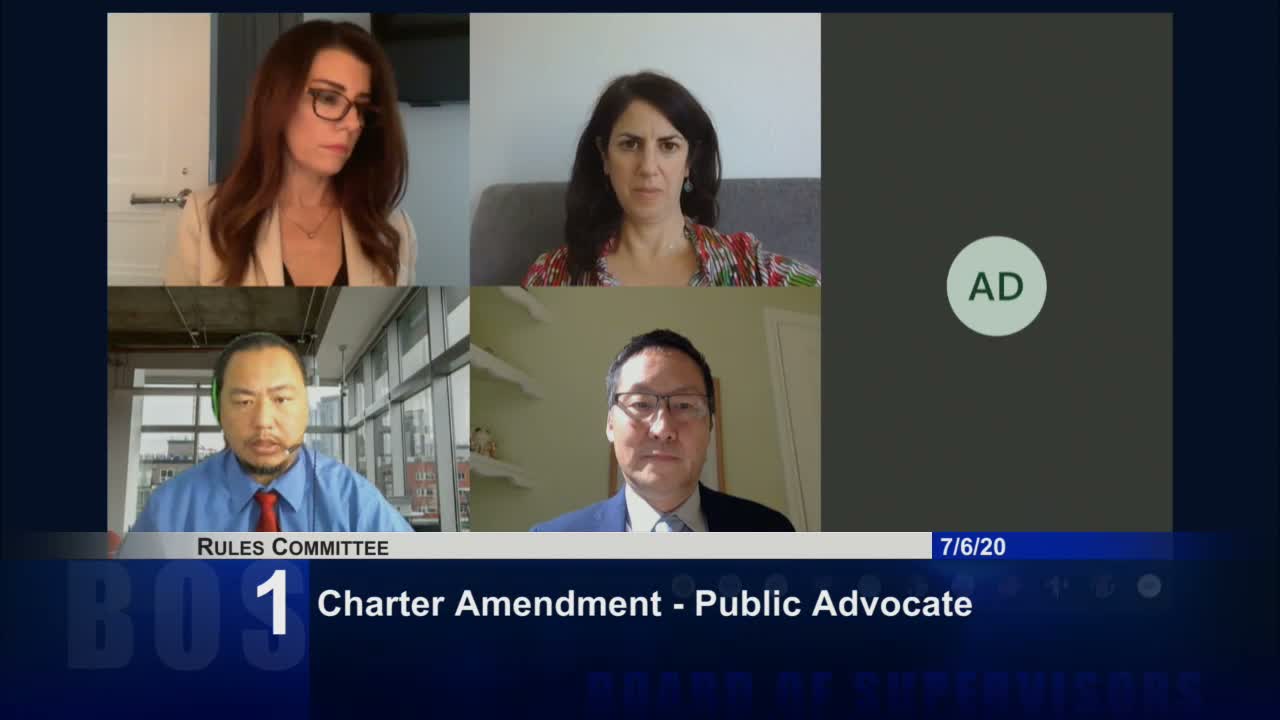
Rules Committee advances Haney’s charter amendments to create Department of Sanitation and Streets, rejects commission‑only alternative
Summary
The Rules Committee approved the sponsor’s set of amendments to a charter measure to create a Department of Sanitation and Streets but voted down a competing amendment to replace it with a commission-only approach. The committee continued final consideration to the call of the chair after extensive public comment and cost questions from the controller’s office.
Supervisor Matt Haney’s charter amendment to create a Department of Sanitation and Streets — and associated oversight commissions — cleared a committee vote on July 6 after a long debate over cost, structure and accountability.
Haney, the item’s sponsor, opened the discussion by arguing San Francisco needs a focused department and new accountability mechanisms to address the city’s street‑cleaning problems. "San Francisco has become infamous for its filthy streets," he said, citing a Department of Public Works (DPW) budget he described as “$387,000,000 and over 1,600 FTEs” and arguing the city has spent tens of millions with inadequate results. Haney said the amendment would create a department with baseline services, public input and oversight and that, as written, the measure would have no net cost for the next two fiscal years.
Supervisor Stephanie raised concerns about cost and administrative duplication in the middle of a large budget shortfall. The Controller’s Office representative, Natasha Mihal, told the committee its updated estimate remained "4 to $10,000,000 annually," a figure she said had not changed after the latest text revisions. “That estimate is 4 to $10,000,000 annually,” Mihal said when asked to quantify the projected ongoing cost.
DPW leadership warned splitting the department could raise the city’s overhead rate. Acting DPW leadership said that, based on how administrative functions are split, "it's likely you would have a higher...overhead rate," which could spread additional cost across city accounts. Haney and cosponsors said the charter language allows the City Administrator to provide administrative services to the new entity to limit added overhead.
Public comment was overwhelmingly in favor of Haney’s approach. Small business owners, community organizers and residents from the Tenderloin, Mission, Bayview and other neighborhoods pressed the committee to adopt stronger, dedicated street‑cleaning capacity and better contract opportunities for local small businesses. Callers urged supervisors to engage local business groups and LBEs in implementation plans.
On the motions before the committee, the sponsor’s package of amendments was approved by roll call (recorded as Stephanie: aye; Mar: aye; Ronan: aye). A separate amendment from Supervisor Stephanie that would have preserved DPW as a single department and instead created a Public Works Commission was defeated (Stephanie: aye; Mar: no; Ronan: no). After votes on amendments, the committee voted to continue final consideration of the measure to the call of the chair to allow for further drafting and scheduling.
The committee’s action forwarded the sponsor’s amendments while leaving the final form of the charter language and the timing of a future vote open. Supporters said the changes aim to improve accountability, equity and street conditions; critics warned of new administrative costs and urged alternatives that would preserve existing departmental structure while adding oversight.
What’s next: the committee continued the matter to the call of the chair for further drafting and scheduling. Implementation details and any final ordinance language will be revisited at a future meeting.