Get Full Government Meeting Transcripts, Videos, & Alerts Forever!
Get email alerts on the Reparations topic
No spam. Unsubscribe anytime.
Rules Committee backs resolution to create advisory process for reparations plan
Summary
The Rules Committee unanimously adopted amendments and forwarded a resolution that sets a city-led process to develop a reparations plan for Black San Franciscans, after presentations from the Human Rights Commission and Mega Black SF and broad public support.
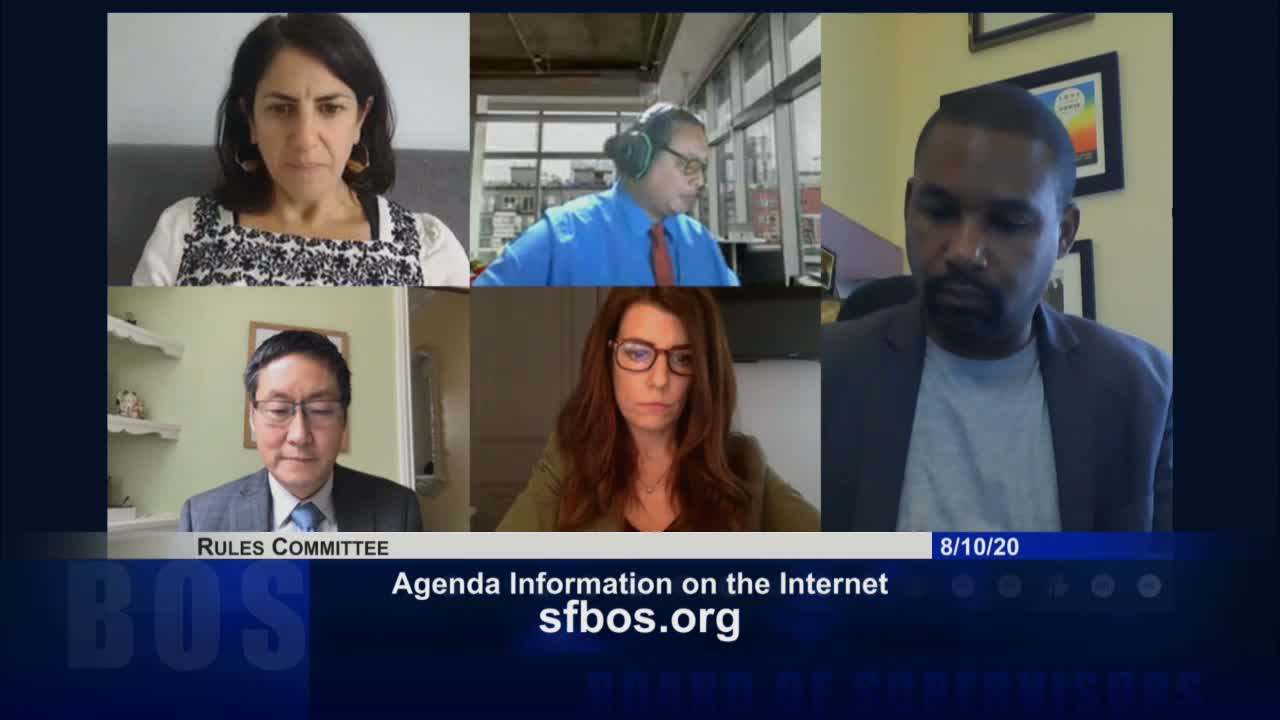
The San Francisco Board of Supervisors Rules Committee on Aug. 10 unanimously approved amendments and forwarded to the full Board a resolution that starts a city-led process to develop a reparations plan for the city’s Black community.
Supervisor Shamann Walton, who led the item, said the measure grows out of months of community engagement and Board co-sponsorship. "We have known the injustices that continue to plague the black community here in San Francisco and across the country, and we unanimously, unanimously introduced a resolution in support of a reparations plan at the Board of Supervisors," Walton said during his opening remarks.
Cheryl Davis, director of the Human Rights Commission, presented engagement findings and a draft framework. Davis said the commission heard from hundreds of community members and noted stark disparities: "Black people comprise only less than 6% of the San Francisco population, and yet they represent 38% of the unhoused population, 46% of the people incarcerated in county jail, 55% of the juveniles on probation," she said, summarizing the data the advisory process will examine.
Davis outlined initial, draft budget placeholders the mayor’s office had discussed during early planning: $60,000,000 in draft reinvestment funding, with $36,000,000 proposed to the Department of Public Health, $3,000,000 to the Human Rights Commission for accountability and systems change, and $21,000,000 to the Office of Economic and Workforce Development for economic and workforce programs. Davis emphasized that the numbers were placeholders and that the advisory committee would refine priorities with community input.
Mega Black SF, a collective of local Black-led organizations, described working groups and policy pillars — economic power, education and restorative investments, land and business empowerment — and urged the committee to center Black voices in the advisory structure.
After the presentations and nearly two dozen public commenters who voiced support, Supervisor Gordon Marr moved to add Walton’s drafting amendments clarifying that the Board "intends to create" an advisory committee and that trailing legislation will follow. The roll-call vote to accept the amendment was recorded as: Supervisor Stephanie — Aye; Supervisor Marr — Aye; Chair Ronan — Aye. Marr then moved to forward the item to the full Board with a positive recommendation; that motion also passed unanimously.
What happens next: the ordinance language will be finalized and the item will go before the full Board of Supervisors, where the committee’s positive recommendation means the resolution will be considered by the full body.
The committee’s action does not itself create a committee or appropriate funds; it directs staff to return with legislation and a structure for an advisory committee that will gather public input, recommend allocations and include regular reporting and accountability mechanisms.