Get Full Government Meeting Transcripts, Videos, & Alerts Forever!
Get email alerts on the Sanctuary Policy topic
No spam. Unsubscribe anytime.
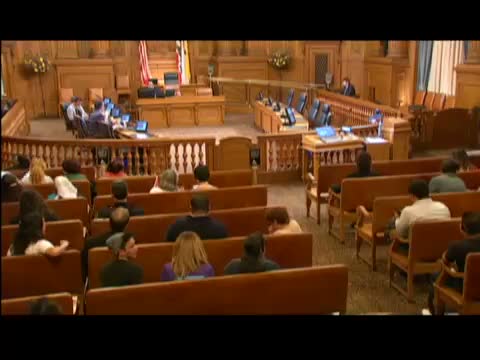
Committee forwards stronger sanctuary ordinance to Board after hearing on Pedro Figueroa case
Summary
The Public Safety and Neighborhood Services Committee voted to forward an amendment to San Francisco’s sanctuary and Due Process for All ordinances to the full Board, removing a 1993 exception and extending protections to ICE notification requests after testimony about the Pedro Figueroa case and widespread public comment on immigrant trust and public safety.
San Francisco’s Public Safety and Neighborhood Services Committee voted without objection to forward to the full Board an update to the city’s sanctuary and Due Process for All ordinances that would remove an older exception allowing local law enforcement to coordinate with federal immigration officials when someone was booked on a felony and extend due-process protections to ICE notification requests under the federal Priority Enforcement Program.
The vote followed more than two hours of testimony and a joint discussion of two items: an ordinance to prohibit use of city funds or resources to assist in federal immigration enforcement except in narrowly defined circumstances, and a hearing to review the police and sheriff’s departments’ policies and responses in the case of Pedro Figueroa, who says he was turned over to federal immigration authorities after visiting a police station to retrieve a stolen car.
The committee’s chair, Supervisor John Avalos, framed the changes as an effort to update obsolete language in the sanctuary ordinance (originally adopted in 1989 and amended in 1993) and to preserve community trust with law enforcement. Avalos said the 1993 exception — which allowed contact with federal officials when someone was booked on a felony — is no longer appropriate because national immigration-enforcement practices have changed since the amendment was adopted.
Sheriff Vicki Hennessy told the committee she personally reviewed ICE notification requests and has issued internal direction sending requests up to her office and legal counsel for case-by-case review. She said her office receives roughly five ICE notification requests per week and has not, to date, found a case that met the criteria she described for notification. Hennessy described those criteria as focusing on people with recent violent-felony convictions or other narrowly defined serious or repetitive convictions, and said deputies were instructed not to book administrative immigration warrants into the warrant system.
San Francisco Police Department Captain Jack Hart apologized to Figueroa and his family, described department bulletins issued in February (including Department Bulletin 16-015 and a subsequent clarifying bulletin), said all officers must read and electronically acknowledge the guidance, and described training and roll-call discussion as tools for implementation. Hart said the SFPD has referred the specific incident for investigation and the Police Commission will review the matter; he declined to say whether any discipline has been imposed because case files and personnel actions can be confidential.
Figueroa and his attorneys described the underlying facts: they said an ICE administrative “warrant” from an in-absentia immigration proceeding appeared in the department computer system when he arrived to recover his car, and that interaction resulted in an immigration arrest. Counsel explained that Figueroa had not received notice of the earlier immigration hearing and that an immigration judge later reopened his case when that fact came to light.
Public comment was heavily weighted toward immigrant-rights advocates and residents who described fear that notification or cooperation with ICE chills reporting of crimes and endangers victims and witnesses. Multiple speakers and community organizations — including the Public Defender’s Office, Asian Law Caucus, La Raza Centro Legal, California East Justice Alliance, and Mujeres Unidas y Activas — urged the committee to remove the lower 1993 standard and to extend Due Process for All protections to notification requests, which advocates said produce outcomes similar to ICE detainers.
Supervisor David Campos sharply questioned the sheriff’s and police department’s practices and urged clarity and discipline where appropriate. Campos said the city must be either a sanctuary or not, and said mixed signals from top officials undermine trust. Chair Avalos and Campos both said they aim to send the stronger standard — limiting exceptions to those with violent-felony convictions within seven years and considering rehabilitation and community ties — to the full Board with the committee’s endorsement.
The committee recorded two procedural actions: a motion to excuse Chair Jane Kim and the motion to forward the legislation and to file the hearing record, both taken without objection. The Board is expected to consider the ordinance at its April 19, 2016 meeting.
The committee’s action does not itself change departmental practice; supervisors and advocates said they will monitor implementation, departmental training, and any disciplinary outcomes from the Figueroa incident as the ordinance proceeds to the full Board.