Get Full Government Meeting Transcripts, Videos, & Alerts Forever!
Get email alerts on the Pier 70 topic
No spam. Unsubscribe anytime.
Supervisors hear comprehensive Pier 70 plan, amendments; committee continues items to full board
Summary
The Land Use Committee heard multi-agency presentations and broad public support for the 28-acre Pier 70 redevelopment, including commitments to 30% on-site affordability, transportation funding, arts space and shoreline resiliency. Supervisors agreed to continue items 1— for one week so amendments (including an office-cap) can be refined.
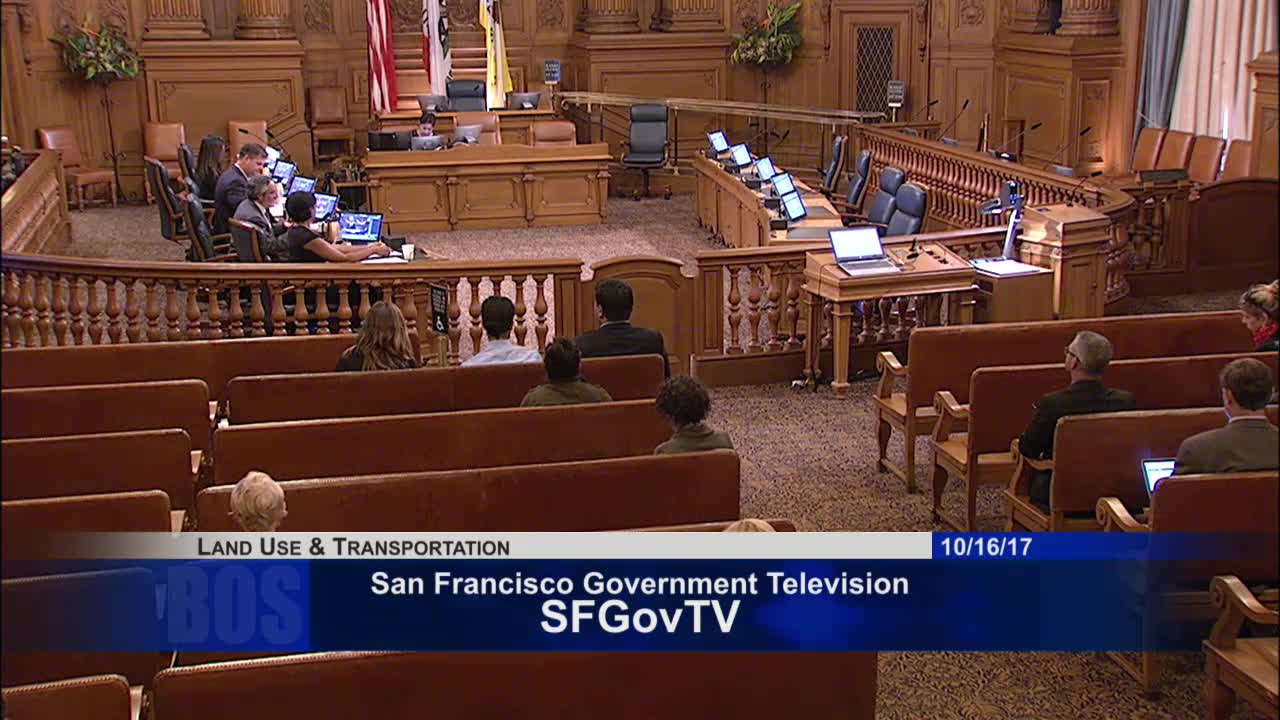
San FranciscoBoard of Supervisors' Land Use Committee on Oct. 16 heard a multi-hour presentation on the proposed Pier 70 mixed-use project and its associated amendments before voting to continue the items to the full board for further consideration.
Supervisor Malia Cohen, whose district includes Pier 70, described the project as a plan to "reintegrate and restore a 28 acre site" in the Dogpatch and said the developers public-benefits package totals "over $750,000,000," including public housing with 30% on-site affordability, transportation investments, workforce-development programs and historic rehabilitation.
Jack Sylvan of Forest City, the project sponsor, told the committee the plan grew from a decade of public outreach and ballot approval and would deliver a mixed-use district that could include about 2,300 residential units, roughly 1.1 million square feet of office, 500,000 square feet of retail and makerspace, and significant open space and parkland. David Beaupre of the Port of San Francisco summarized a complex ownership history and said that "Assembly Bill 418" authorized a public trust exchange to confirm trust lands (ship repair, waterfront parks and related roadways) and allow other parcels to be removed from trust for development.
Sarah Dennis Phillips of the Office of Economic and Workforce Development outlined the public-benefits package in greater detail: 30% of units on-site would be permanently affordable (the majority at low-income levels), three port-dedicated parcels would support a minimum of about 327 permanently affordable units, and transportation commitments totalled roughly $45—$50 million depending on the final program. She said the project would include a 90,000-square-foot arts facility, 100 childcare spaces, workforce-training contributions and a proposed local financing mechanism for storm and shoreline protections.
Planning Department staff told the committee the Planning Commission certified the final EIR on Aug. 24, 2017, adopted CEQA findings and recommended the planning-code and zoning changes establishing the Pier 70 Special Use District and the Design for Development document.
More than a dozen members of the public—including neighborhood groups, artists, housing advocates, construction unions and a former mayor—spoke in support of the project while pressing for clarity on parking, transportation mitigations and the balance of commercial versus residential uses on flexible parcels. Speakers cited neighborhood outreach, Prop F ballot support and local hiring commitments as reasons to move the project forward.
Supervisor Cohen said she circulated a package of mostly typographical and non-substantive amendments and proposed one substantive cap: a 1,700,000-square-foot limit on office development to preserve a stronger housing emphasis. Supervisors raised a set of procedural and oversight questions for the intervening week, including how the Design for Development will be used to control future phases, the adequacy of public-notice timeframes, delegation of approval powers to the Port and how on-site and off-site affordability commitments in the planning code, DDA and DA combine to reach the stated 30% affordability goal.
After discussion the committee did not vote to approve items 1—; Supervisor Tang moved to continue the items for one week so that the proposed amendments and outstanding questions can be addressed at the full board. The motion passed without objection.
What happens next: the planning-code amendments, development agreement and the Port-related transfer documents will return to the board with the amendment language and follow-up materials, and the Budget and Finance Committee is scheduled to receive related DA/DDA items later in the week for additional review.