Get Full Government Meeting Transcripts, Videos, & Alerts Forever!
Get email alerts on the Parking Tax Reform topic
No spam. Unsubscribe anytime.
Supervisors consider sweeping parking-tax enforcement changes, bonding and equipment rules
Summary
Committee reviewed two dense ordinances that would revamp parking‑tax administration and enforcement — raising bonding tiers (up to $800,000), expanding data reporting, enabling permit revocation and stronger penalties — and the measures were continued with amendments for further review.
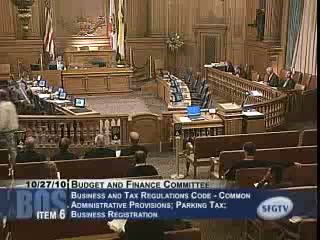
The Budget & Finance Committee on Oct. 19 considered two companion ordinances that would revise the City and County of San Francisco’s business and tax regulations to strengthen parking‑tax compliance and enforcement.
Supervisor McRaevey, a sponsor, described the package as a technical but consequential update to the code: among the changes are expanded administrative provisions, higher bonding requirements tailored to operator size (Treasurer’s office briefed the committee that bonds could range from about $20,000 to as much as $800,000 depending on operator class), new enforcement authority for the tax collector (including permit revocation and shutdown of noncompliant parking stations), and stronger administrative citation penalties and reporting requirements tied to revenue control equipment.
David Augustine from the Treasurer’s Office said the legislation is the next step in a multi‑year effort to improve parking tax collections, complementing an existing revenue‑control‑equipment law and requiring more detailed information on parking tax returns. Deputy City Attorney Cheryl Adams informed the committee that one proposed change — to exhaustion of remedies in Chapter 6 — is substantive and should remain with the file rather than be forwarded immediately.
The police permit section and Department of Public Works representatives described operational coordination needed for permitting and inspection. Public testimony included industry and neighborhood voices both supporting and questioning aspects of the proposal; supervisors requested and received amendments and agreed to hold certain substantive changes behind and continue the items for one week with agreed amendments.
Next steps: The committee agreed to accept non‑substantive amendments and continue both items together; one substantive amendment will remain under review and not advance this week.