Get Full Government Meeting Transcripts, Videos, & Alerts Forever!
Get email alerts on the Homeless Services topic
No spam. Unsubscribe anytime.
Supervisors hear progress report on navigation centers; health officials say supervised consumption possible with legal and budget support
Summary
City officials reported results from existing navigation centers, outlined plans for additional sites, and discussed harm‑reduction measures including supervised consumption and expanded sobering/medical respite; department leaders said more funding and state legal protections would be needed for supervised injection sites.
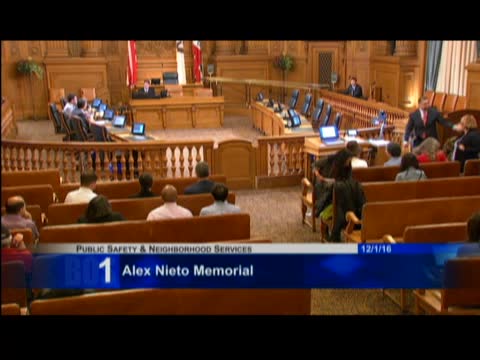
San Francisco city officials told the Public Safety and Neighborhood Services Committee on Dec. 1 that navigation centers — low‑barrier temporary alternatives to shelters — have shown promising outcomes but that additional funding, housing and legal changes are needed to scale the model.
Jeff Kositzky, director at the Department of Homelessness and Supportive Housing (HSH), described two currently operational sites: a Mission Street navigation center at 1950 Mission (operational since March 2015, about 75 beds) and a Civic Center site (about 93 rooms). He said the Mission site has served roughly 865 people and reported that about 79 percent of exits from that site went to stable housing; Civic Center exits to permanent housing were reported at about 60 percent. Average length of stay across sites was described as roughly 120 days.
"Navigation centers are temporary low‑barrier alternatives to shelters," Kositzky said, describing partner organizations that operate the sites and noting the department has secured operating funding for three navigation centers but does not yet have a defined budget or revenue source for the remaining three required by ordinance.
The ordinance passed unanimously by the Board of Supervisors on June 21, 2016 requires the city to open no fewer than six navigation centers within 24 months of the ordinance’s effective date. Kositzky said the department is planning a second site at 620 Fifth Street (modular trailer beds, ~70 beds) and a third at 520 Jessie Street (a Salvation Army building), with additional centers dependent on FY17–18 budget decisions and private philanthropy for capital and operating support. He estimated operating costs of about $2 million to $3 million per site.
Department of Public Health (DPH) Director Garcia addressed supervised consumption (injection) sites and harm reduction. "We do not oppose injection sites, but there are some barriers for us," Garcia said, citing legal and neighborhood concerns and the need for state legislative cover to reduce legal risk. Garcia described expanding an existing harm‑reduction center on Seventh and Mission, increasing sobering and medical‑respite capacity (30 beds), and pursuing grants and state funds to support diversion and treatment services.
Dr. Barry Zevin, medical director for street medicine and shelter health at DPH, emphasized a harm‑reduction clinical approach and described a pilot for public injectors in Civic Center/SoMa that will include counseling, low‑threshold buprenorphine starts and assertive follow‑up to connect people to care.
Public commenters included representatives of advocacy organizations and community members. Laura Thomas of the Drug Policy Alliance urged the city to support pending state legislation that would provide legal protections for supervised consumption services; she cited a San Francisco cost‑benefit analysis that projected savings of $2.33 for every $1 spent and a potential annual savings of about $3.5 million for a small 12‑seat facility, primarily from averted HIV/hepatitis C and soft‑tissue infections.
Advocates also raised operational concerns: one speaker urged that navigation center clients receive the same grievance and appeal rights provided to occupants of city‑funded shelters, and others asked for outreach to underrepresented groups (Kositzky flagged lower-than-expected African American representation among clients and said staff are redoubling outreach and bias training).
Committee members praised the departments’ efforts and asked for additional detail in the forthcoming strategic plan, housing‑and‑revenue plan and coordinated‑entry implementation. Kositzky said some strategic‑plan elements are on schedule and others will take additional months; he committed to follow‑up information on demographic breakdowns and detailed housing/shelter‑need modeling.
Supervisor Campos and colleagues moved to file the hearing; no formal vote on policy changes was taken at the meeting. Officials said they will continue to pursue philanthropic support, budgetary allocations and, where necessary, state legislation to advance supervised consumption and broader navigation center expansion.