Get Full Government Meeting Transcripts, Videos, & Alerts Forever!
Get email alerts on the Energy Policy topic
No spam. Unsubscribe anytime.
San Francisco committees press CPUC to reject PG&E proposals, warn PCIA and net‑metering changes could stall Clean Power SF
Summary
City officials and clean‑energy advocates urged the California Public Utilities Commission to reject PG&E proposals to cut net‑metering credits and sharply raise the Power Charge Indifference Adjustment (PCIA), saying the combined changes could reduce Clean Power SF’s revenues and slow rooftop solar growth.
San Francisco board and LAFCO members on Friday urged the California Public Utilities Commission to resist proposed changes by Pacific Gas & Electric that advocates and local officials say would undermine rooftop solar and the city’s Clean Power SF community choice program.
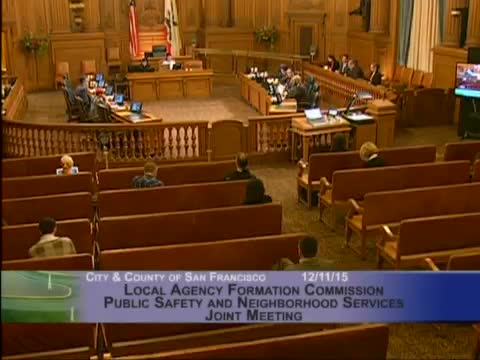
Supporters at a joint meeting of the Public Safety & Neighborhood Services Committee and the Local Agency Formation Commission (LAFCO) described two related CPUC dockets: one on net energy metering and another on the Power Charge Indifference Adjustment, or PCIA. Susanna Churchill of VoteSolar told commissioners the CPUC had not issued a proposed decision and that utility proposals would ‘‘drastically reduce solar savings’’ for future customers: ‘‘they wanna reduce the bill credits for the exported clean energy by more than 50%, which would end net metering,’’ she said, and cited additional measures including a proposed $3 per‑kilowatt monthly demand charge and limits on credit rollover.
Why it matters: Commission staff and outside presenters said the combined effect of reduced export credit and higher exit fees could chill the rooftop solar market and make Clean Power SF less competitive with PG&E. Shawn Marshall of Lean Energy testified the PCIA was ‘‘scheduled to go up nearly a 100%’’ for 2016 and estimated the increase could amount to roughly 2.3¢ per kilowatt‑hour, creating an $8.4 million hit to Clean Power SF for the partial rollout year if adopted as proposed.
SFPUC Assistant General Manager Barbara Hale said the SFPUC adopted a similar resolution on Dec. 8 and asked the CPUC to reexamine the PCIA calculation method, urging greater transparency: ‘‘we really can’t look for ourselves and see what the calculation is,’’ she said of PG&E’s November filing, which staff described as heavily redacted.
Local officials emphasized urgency. Jason Fried, LAFCO executive officer, recommended quick coordination so letters and comments could be filed before the CPUC’s calendar (a CPUC hearing was set Dec. 17). Commissioners and staff discussed next steps including drafting letters and preparing for public engagement during the CPUC’s proposed‑decision comment period, expected to precede a final order in mid‑January at the earliest.
What supporters proposed: Marshall and other presenters urged remedies ranging from third‑party audits of PCIA calculations and increased transparency to smoothing mechanisms or caps on year‑to‑year PCIA spikes. VoteSolar and allied groups urged the CPUC to preserve net‑metering retail credits and avoid novel demand charges for residential customers.
Public reaction and advocacy: Clean‑energy advocates and community groups urged the city to press the CPUC directly and to be prepared to act in January if the commission moves against CCAs. Speakers cited statewide and local risks: the advocates noted that more than 150,000 written comments had been filed in the net‑metering docket and urged San Francisco to be on the record before the CPUC hearing.
Next steps: The committee adopted technical amendments and forwarded the two resolutions as a committee report to the full Board of Supervisors, with staff and LAFCO instructed to draft and submit letters to the CPUC prior to the hearing schedule. SFPUC staff will finalize supplier negotiations, watch for PG&E’s January 1 rate publication, and reassess Clean Power SF’s launch if the combined cost picture fails to meet the program’s affordability target (defined in staff materials as 0.25% below PG&E rates).