Get Full Government Meeting Transcripts, Videos, & Alerts Forever!
Get email alerts on the Alcohol Fee topic
No spam. Unsubscribe anytime.
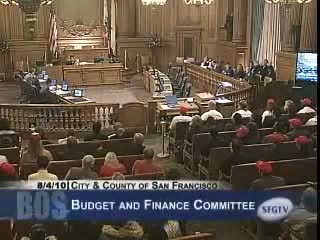
Committee debates San Francisco alcohol mitigation fee; measure continued for further review
Summary
A proposed fee on alcohol wholesalers to pay for public‑health and emergency costs drew hours of testimony from officials, economists, unions, small businesses and community groups; the committee accepted amendments and continued the ordinance to a follow‑up meeting for more analysis and public input.
At a Budget and Finance Committee hearing, Supervisor John Avalos introduced an ordinance to impose an alcohol mitigation fee on wholesalers and certain distributors to recover part of the city’s alcohol‑attributable unreimbursed health and emergency costs. The proposal would direct revenue to public health, sobering and emergency services that city officials say have faced repeated cuts.
The controller’s Office of Economic Analysis, represented by Ted Egan, presented an economic impact review. Egan said the Nexus study estimated San Francisco’s alcohol‑attributable costs at about $18,100,000 and that a fee calibrated to that estimate would recover roughly $13.6–16.2 million under previous versions of the ordinance. Egan recommended reducing the originally proposed fee level by 25% to avoid over‑collection and to reflect uncertainties in local consumption estimates: “The total attributable cost to excessive alcohol use in the city is $18,100,000,” he said, and cautioned that revenue estimates carry uncertainty in the first year because of compliance and consumption effects.
Sponsors explained the ordinance would be levied at the wholesale level and administered by the Treasurer‑Tax Collector; the city would audit collections. Treasurer’s office staff said implementation would rely on distributor reporting and quarterly remittance forms. The controller and budget analyst stressed the fee depends on assumptions about pass‑through to retail prices and changes in consumption; the budget analyst also flagged a standard statutory point that the proposal is a policy matter for the Board because of its fiscal and regulatory effects.
Supporters — including public‑health officials, substance‑abuse providers, the Firefighters’ Local 798 and several community organizations — said dedicated funding would stabilize treatment, prevention and emergency services. Dr. Mitch Katz of the Department of Public Health said the funding would help maintain existing sobering, mobile outreach and treatment services. “These services are being provided now; this provides a more secure way of funding them,” DPH testimony said.
Opponents — small business owners, restaurant and brewer associations, wholesalers and distributors — warned the fee would be passed through to retailers and consumers, harm small businesses and cost jobs. Business groups and some retailers disputed the Nexus study’s assumptions and urged delay so that the legal basis and economic modeling could be reviewed. The Chamber of Commerce and the Golden Gate Restaurant Association asked for a formal city attorney opinion about whether the measure is a permissible fee or an improper tax under state law.
Public comment ran for hours. Speakers in favor included treatment providers and community advocates who said the fee would protect services for vulnerable populations; speakers opposed included small restaurateurs and wholesalers who warned of pass‑through effects and administrative burdens. Several union representatives said potential private‑sector job losses were a risk; the controller’s analysis projected a small net private‑sector job loss offset by public‑sector job retention under some revenue assumptions.
The committee accepted an amendment to change how the fee is expressed (moving from an ounce‑based rate to a gallon‑based billing mechanism) and to lower the fee level by about 25% per the controller’s recommendation. Members stressed the measure would be revisited: the committee continued the item for further committee consideration at a follow‑up meeting and scheduled additional hearings to allow more stakeholder input and legal review. The ordinance will return to committee the coming Monday for further amendments and then, if advanced, go to the full Board for a final vote after a legislative break (the sponsor identified a September date for full Board action if it proceeds).