Get Full Government Meeting Transcripts, Videos, & Alerts Forever!
Get email alerts on the Community Testimony topic
No spam. Unsubscribe anytime.
Survivors and advocates tell supervisors language failures can be dangerous
Summary
At the committee hearing, domestic‑violence advocates and residents recounted incidents where lack of interpreters, poor translations and dismissive staff hindered police reports, restraining orders and access to health and housing services.
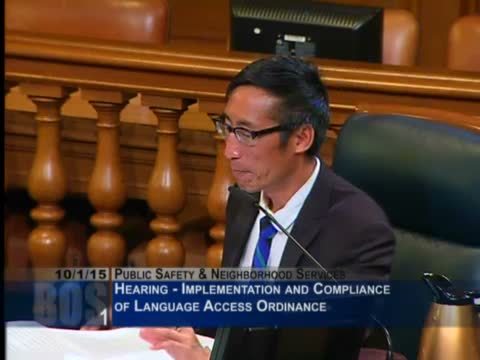
San Francisco — Community advocates and residents who testified at an Oct. 1 Board of Supervisors committee hearing described a pattern of inadequate or poor‑quality language services across city agencies, saying the consequences range from missed benefits to safety risks for survivors of violence.
During public comment, Anna DeCarolis, language access coordinator at Mujeres Unidas y Activas, said the Language Access Network’s outreach is essential because many immigrants do not know their rights under the ordinance. “The Language Access Network's work doing outreach and education in the community in more than 8 different languages is extremely important as most of our community members are still unaware of the language access ordinance,” she said.
Multiple public speakers gave first‑hand accounts: one domestic‑violence survivor described being mocked by an officer and initially denied interpretation, forcing a late‑night trip and delays in filing a report; Caroline Calderon of the Bill Sorro Housing Program described applicants being handed only English below‑market housing forms and missing deadlines; a representative of the African Advocacy Network described a client who lost nearly $2,000 in medical savings after not understanding a notice about eligibility changes.
Advocates asked for stronger enforcement steps: certified translators for police reports and critical forms, expanded outreach to emerging language groups (including Tigrinya and Amharic), and continued community‑based spot checks on departmental compliance. Beverly Upton of the San Francisco Domestic Violence Consortium pressed for prompt, certified translation of police reports and for no delays in filing victims’ reports.
Departments at the hearing described policies and training — wallet cards for officers, language lines and spot‑check pilots — but community leaders said implementation remains inconsistent and sometimes harmful.
“The lack of culturally responsive services in language erode limited English proficient survivors' trust in city agencies,” Anna DeCarolis said during testimony.
The committee closed public comment after more than a dozen speakers and continued the item for further review; supervisors asked OSEA and departments to improve outreach, data collection and goal setting.