Get Full Government Meeting Transcripts, Videos, & Alerts Forever!
Get email alerts on the Language Access topic
No spam. Unsubscribe anytime.
San Francisco hearing finds progress and persistent gaps in language access compliance
Summary
City officials reported increased bilingual staff and new reporting tools, but OSEA data showing a 9% drop in language‑access budgets, uneven departmental reporting, poor translation quality and low certification rates in some departments drew concern from supervisors and community advocates.
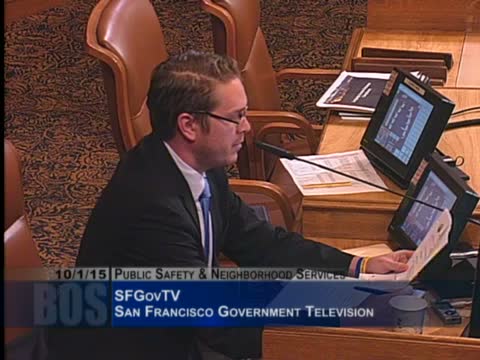
San Francisco — City and community speakers at a Board of Supervisors committee hearing on Oct. 1 reviewed the annual Language Access Ordinance compliance report and described both gains and ongoing problems in providing services to residents with limited English proficiency.
Chair Eric Marr opened the Public Safety and Neighborhood Services Committee hearing by tracing the ordinance’s roots to a 2001 equal access law and the 2009 language access ordinance, and called language access a “civil right” for many immigrant and newcomer communities. Adrienne Pan, executive director of the Office of Civic Engagement and Immigrant Affairs (OSEA), told supervisors nearly half of San Francisco residents speak a language other than English at home and about one in four are limited‑English proficient.
Why it matters: The report is intended to show where city departments provide interpretation, translation and bilingual staffing so LEP residents can access services from police and public health to housing. Citywide data presented at the hearing showed a near‑one‑third increase in bilingual public contact staff, while OSEA reported a roughly 9% decline in language‑access budgets for fiscal year reporting — a gap that drove much of the committee’s discussion.
What departments said: OSEA described new reporting tools, community interpreter training and a web‑based compliance portal. Departments gave mixed accounts: the Human Services Agency said differences in how data were requested (expenditures vs. budgets) explained apparent declines; the Department of Public Health said reorganizing and bringing services in‑house led to more bilingual staff and lower contracted costs; the Department of Emergency Management reported 15,000 calls requiring interpretation in FY13‑14 and said the state pays for 9‑1‑1 interpretation services.
Numbers and capacity: SFPD reported 271 certified bilingual public‑contact staff and 447 total bilingual public‑contact staff when civilians are included; HSA reported about 557 bilingual employees serving roughly 88,000 LEP clients; Recreation & Parks said it currently has about 60 bilingual staff but only five certified. Departments noted high staff turnover and inconsistent data collection have complicated reporting.
Community concerns and quality: Community groups and residents told the committee that outreach is uneven, translations are sometimes literal or incomprehensible, and that poor language access can endanger survivors and people seeking health or housing services. “For domestic violence survivors, having access to city services in language is key to overcoming violence,” Anna DeCarolis, a language‑access coordinator, told the committee. Several commentators described delayed or inaccurate translations of police reports and agency forms.
Next steps: Supervisors urged stronger goal setting, better interdepartmental coordination with OSEA, and more robust community education. Chair Marr asked for the item to be continued to the call of the chair; the committee moved to continue the item without objection. The board said it expects updated departmental compliance reports reflecting the 2015 ordinance amendments and improved data collection in coming months.
Quote highlight: “To many immigrant and newcomer communities, language access is a civil right,” Chair Eric Marr said during the hearing.
The committee closed public comment after multiple community testimonies and continued the item for further review and follow‑up.