Get Full Government Meeting Transcripts, Videos, & Alerts Forever!
Get email alerts on the Childcare Housing topic
No spam. Unsubscribe anytime.
Committee pauses proposal to let developers dedicate inclusionary units to family childcare providers
Summary
A proposal to allow developers to dedicate inclusionary housing units to licensed family childcare providers — creating affordable housing for providers and six childcare slots per unit — drew extensive testimony from providers and parents and was continued for further amendments and coordination with housing policy work.
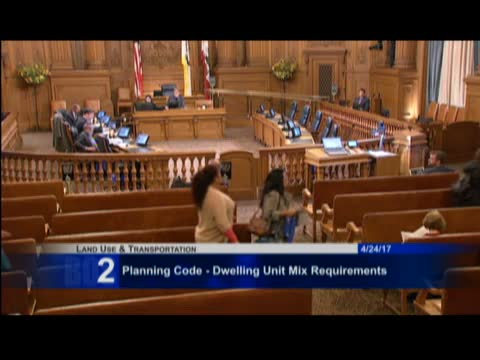
The Land Use Committee on April 24 continued consideration of an optional program that would allow developers to dedicate inclusionary housing units to licensed family childcare providers in lieu of paying a residential childcare impact fee.
The proposal on the agenda would let a developer offer a below‑market inclusionary unit to an eligible licensed family childcare provider when the development produces 10 or more inclusionary units; each designated unit would allow the provider to operate a family childcare program serving up to six children and would be subject to inclusionary‑housing eligibility rules.
Sponsor remarks and data: The sponsor (identified in the packet) and the bill’s backers said San Francisco faces a childcare shortage — committee materials and the sponsor’s remarks cited "over 3,500 children on the eligibility list" and that licensed capacity serves about 42% of children of working parents. The sponsor said the city’s 2016 expansion of the childcare impact fee is expected to generate roughly $5,000,000 for the Childcare Facilities Fund over 10 years. Planning Department staff and Office of Early Care & Education staff presented a fiscal analysis showing average net income for family childcare providers in the analyses at roughly $33,000–$34,000 per year.
Planning commission history: Aaron Starr of the Planning Department said the Planning Commission in 2015 recommended removing the designated childcare unit (DCCU) from the inclusionary ordinance and treating it as a separate piece of legislation; Starr said the change was intended to avoid reducing the number of below‑market rentals (BMR units) available to others while still allowing a separate preference for DCCUs.
Public testimony: Several current and former family childcare providers and parents described eviction and displacement of long‑time providers and urged the committee to adopt the option. Beatrice Gibson said designating units for childcare would have kept her mother’s 20‑year family childcare business open; Anna Moreno described being evicted and losing her program and the consequences for eight families she served. Maria Lusteri of Parent Voices said family childcare offers an essential choice for parents and that provider licensing is difficult and costly.
Committee response and procedural outcome: Supervisors acknowledged the policy’s intent but said broader, unresolved questions about the inclusionary housing program (AMI splits, density bonus interactions and program predictability) need resolution before adopting the DCCU. For that reason the sponsor requested, and Supervisor Katie Tang moved, a continuance to the call of the chair; the motion was taken without objection.
What happens next: Committee members asked staff to continue coordination with the Mayor’s Office of Housing and the Office of Early Care & Education and to return with clarified language and any needed amendments before the item is scheduled again.