Get Full Government Meeting Transcripts, Videos, & Alerts Forever!
Get email alerts on the Transportation Policy topic
No spam. Unsubscribe anytime.
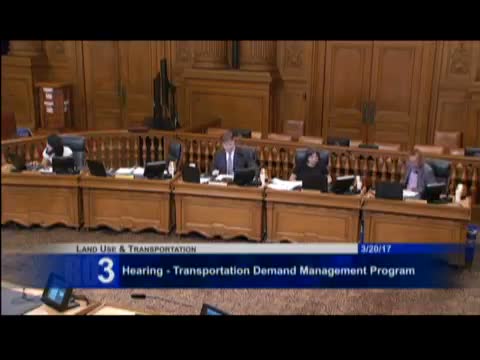
Board hears technical briefing on new transportation demand management program; staff to return for follow-up
Summary
Staff from SFMTA and Planning briefed supervisors on the TDM ordinance measures-and-points approach (effective the day before the hearing), including a card-based menu of 66 options to reduce vehicle miles traveled, monitoring and proactive enforcement, and special scoring for shuttles, family-friendly measures and parking management. Supervisors asked for follow-up and raised concerns about private-for-hire shuttles and alignment with other city goals.
Supervisors discussed the new Transportation Demand Management (TDM) program and its technical standards in a hearing led by Supervisors Yee and Yi. Carly Payne (SFMTA) described the TDM ordinance—s purpose: to require land-use projects to provide on-site amenities or services that reduce vehicle miles traveled (VMT) by encouraging walking, biking and transit use. Wade Wickeroff (Planning) explained the TDM program standards document and the points-based menu: staff organized 26 measures into eight categories and created 66 options with point values assigned based on literature, local parking-VMT research and professional judgment.
Wickeroff and Payne described example projects and how points add up to meet targets tied to parking supply and project type. They highlighted shuttle service as a high-point measure (7 points for 15-minute peak headways; 14 points for 7.5-minute peak headways) but said shuttle proposals would be rare, costly, and subject to city vetting for safety, duplication of transit, and operational impacts. The presenters emphasized proactive monitoring and reporting: site audits before certificate of occupancy, ongoing monitoring reports, an 18-month post-occupancy review and developer fees to fund city staff audits.
Supervisors asked how family-friendly measures (on-site childcare, grocery space, etc.) are quantified and noted those items are capped at two points pending further study. Several supervisors raised concerns about private-for-hire vehicles (Uber/Lyft) and privatized shuttle services that could compete with public transit, urging the city to study impacts and to avoid policies that encourage privatized services that undermine Vision Zero and public transit goals. Staff said the menu is designed to be updated as new data arrive and recommended returning to the committee within a year to report findings and adjustments.
Supervisor Yi moved to file the hearing for the record and asked staff to return for follow-up; the committee filed the hearing without objection.