Get Full Government Meeting Transcripts, Videos, & Alerts Forever!
Get email alerts on the Animal Welfare topic
No spam. Unsubscribe anytime.
San Francisco committee backs ban on performing wild and exotic animals
Summary
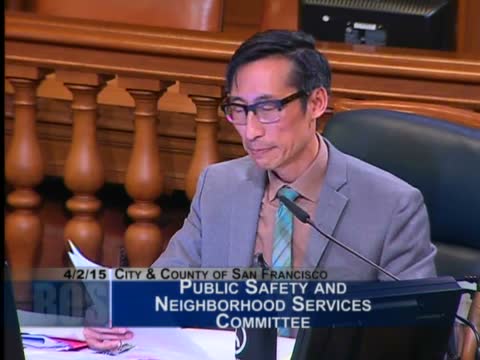
The Public Safety & Neighborhood Services Committee approved an amendment and advanced an ordinance banning non‑educational performances by wild or exotic animals to the full Board of Supervisors, citing animal welfare and public‑safety concerns raised by sponsors, departments and advocates.
Supervisor Katie Tang urged the committee to bar wild and exotic animals from performing for entertainment, saying the best way to send a strong message is to ban such shows in San Francisco. Tang told the committee that federal law — the Animal Welfare Act of 1966 — and similar safeguards do not adequately protect animals used by traveling circuses and other performers.
Virginia Donoghue, executive director of San Francisco Animal Care and Control, told the panel she had reviewed the ordinance and that ACC could implement and enforce it as part of the agency’s regular duties. "We are supportive of the intent of the legislation," Donoghue said, noting the city’s role in animal welfare.
The sponsor described the ordinance’s scope as covering non‑educational performances by animals such as elephants, tigers, bears and primates and said violations could carry up to a year in jail and fines of up to $1,000 per violation. Tang offered a non‑substantive amendment to replace a named sanctuary with the Global Federation of Animal Sanctuaries, saying the Global Federation holds higher standards for treatment of animals.
Representatives of the San Francisco Zoo and the Animal Control and Welfare Commission testified in support, stressing a distinction between accredited educational exhibits and traveling shows. Public commenters from animal‑welfare groups and local volunteers described documented practices they said amount to abuse — bull hooks, prolonged confinement, and long transportation segments — and tied those practices to risks to both animals and the public.
After public testimony, the committee considered the sponsor’s amendment, approved the amendment without objection, and voted to forward the ordinance to the full Board of Supervisors with a positive recommendation as amended. The item will appear on the Board agenda for further consideration.