Get Full Government Meeting Transcripts, Videos, & Alerts Forever!
Get email alerts on the General Plan Restaurant Concentration topic
No spam. Unsubscribe anytime.
Committee votes 2–1 to send general-plan amendment on restaurant concentration to full Board
Summary
The Land Use & Transportation Committee voted to forward a proposal that would remove numeric restaurant-concentration language from the general plan and leave numeric controls to the Planning Code; Supervisor Aaron Peskin voted no, citing loss of neighborhood-specific protections.
The San Francisco Board of Supervisors Land Use and Transportation Committee on March 6 voted to recommend a change to the city’s Commerce and Industry element that would remove numeric restaurant-concentration language from the general plan and rely on the Planning Code for measurement and enforcement.
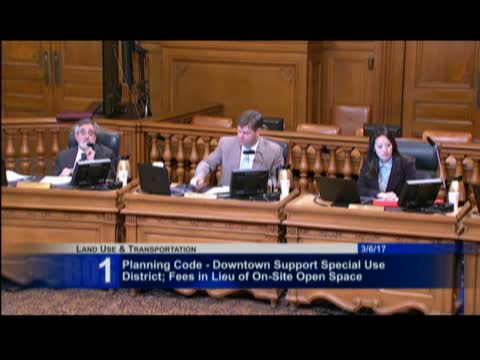
Supervisor Katie Tang moved to send the matter to the full Board as a committee report with a positive recommendation; Supervisor Aaron Peskin seconded. In roll call, Peskin voted No while Tang and Chair Mark Farrell voted Aye, passing the motion and placing the item on the Board agenda for March 14.
The amendment would strike specific numeric concentration standards from the general plan and direct planners to use the Planning Code to determine concentration thresholds during conditional-use (CU) reviews. Planning staff explained the change is intended to preserve the general plan’s policy role while allowing the Planning Code to set and adjust numeric thresholds that respond to neighborhood conditions. Planning staff told the committee the CU measurement looks at the concentration within 300 feet of a proposed site and that concentration levels would be used to inform, but not solely determine, recommendations.
Planning staff Aaron Starr described the proposal as a clarification of roles between policy and implementation: “The proposed changes would remove specific numeric controls for restaurant concentration from the general plan,” and leave numeric calculations to the Planning Code so adjustments can be made to fit neighborhood needs.
Opponents at the hearing warned the change risks erasing neighborhood-specific protections. Supervisor Aaron Peskin argued removing tailored language would take the city down a “one size fits all” path and said certain areas — citing North Beach — were given specific guidelines in earlier updates to preserve neighborhood-serving businesses. “I just don’t really understand why this change to the guidelines for specific uses is necessary,” Peskin said during the committee discussion.
Supporters, including Supervisor Tang, said the broader language gives local communities and staff flexibility to tailor controls in the Planning Code and avoids a rigid, citywide numeric limit that can hinder revitalization in neighborhoods that welcome more restaurants. Tang told the committee she has seen the 25% CU threshold block restaurants that would help revitalize parts of her district.
The committee did not take public comment on this item. The committee report will appear on the Board of Supervisors agenda on March 14 for further consideration by the full Board.