Get Full Government Meeting Transcripts, Videos, & Alerts Forever!
Get email alerts on the Public Safety Speed Enforcement topic
No spam. Unsubscribe anytime.
Committee backs resolution urging state to authorize automated speed enforcement pilot
Summary
The committee voted to send a resolution to the Board supporting AB 342, a five‑year pilot authorizing automated speed enforcement cameras on high‑injury corridors in San Francisco and San Jose, citing Vision Zero goals and evidence from other cities.
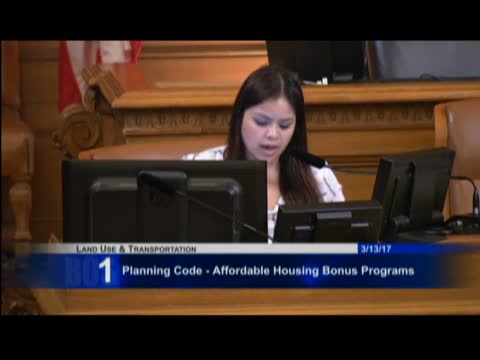
The Land Use & Transportation Committee on March 13 voted to forward a resolution urging the California Legislature and governor to pass AB 342, which would permit a five‑year pilot of automated speed enforcement (ASE) cameras in San Francisco and San Jose on corridors with documented fatal or severe injury collisions.
Sponsor Supervisor Yee outlined Vision Zero goals and cited studies showing sharp reductions in fatalities and speeding where ASE has been deployed in other jurisdictions. Megan Weir of the Department of Public Health described traffic collisions as a public‑health crisis and noted that San Francisco averages about 30 traffic fatalities per year; she said reductions in vehicle speeds are pivotal to saving lives and lowering medical costs.
Tom McGuire of SFMTA detailed AB 342 provisions: authorization of a pilot limited to two cities, camera deployment only on documented high‑injury corridors, enforcement for drivers traveling 10 mph or more over the speed limit, and administrative penalties (described in the hearing as roughly $100 and similar to a parking administrative penalty). McGuire said evaluations would focus on reductions in fatalities, collisions, injuries and measured speeds before and after deployment.
Advocates from the mayor’s office, Assemblymember David Chiu’s office, Walk San Francisco, bicycle advocacy groups and Families for Safe Streets testified in support, recounting local crashes and urging the city to adopt tools proven elsewhere. Public commenters asked for clear evaluation and oversight, and one commenter suggested SFPD oversight of placement decisions; McGuire and staff answered questions about evaluations, signage and corridors.
Supervisor Tang moved and Supervisor Peskin seconded a motion to forward the resolution to the Board with a positive recommendation; the motion was taken without objection.
Next steps: the committee forwarded the resolution to the full Board for its March 21 hearing and SFMTA and public‑health staff said they will conduct evaluation studies if AB 342 becomes law.