Get Full Government Meeting Transcripts, Videos, & Alerts Forever!
Get email alerts on the Green Building topic
No spam. Unsubscribe anytime.
Committee advances update to municipal green-building rules to align with LEED v4
Summary
The committee advanced amendments to Environment Code Chapter 7 to align city requirements with updated California codes and LEED v4, raise applicability thresholds, add net‑zero feasibility and solar-plus-storage analysis, and give the Department of the Environment rulemaking authority on furniture procurement.
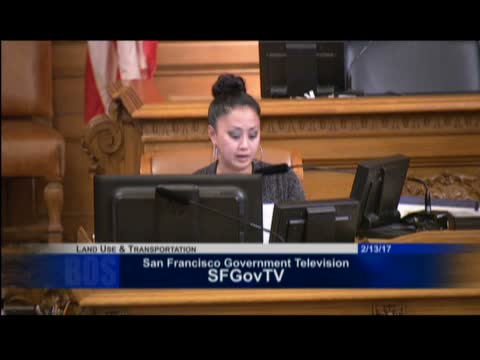
The San Francisco Board of Supervisors Land Use & Transportation Committee on Feb. 13 advanced changes to the municipal green‑building ordinance that update Chapter 7 of the Environment Code and align city requirements with recent California building and energy code changes.
Rafael, the head of the Department of the Environment, told the committee the ordinance is largely a technical update to reflect newer standards — including a transition from LEED version 3 to LEED version 4 — and an opportunity to clarify and add future‑oriented requirements. Rafael said the proposed update raises the ordinance’s applicability threshold from 5,000 to 10,000 square feet (citywide threshold is 25,000) and clarifies that the Port of San Francisco has its own building code and a transparent port waiver process. He also identified concrete cost impacts the office studied: modeled new construction showed about a 0.8% increase in building cost moving to LEED v4, while renovations showed a range of roughly 2.5%–5% depending on how photovoltaic systems are accommodated. Rafael said those incremental costs can be mitigated through integrated upfront planning.
The ordinance adds requirements that each project perform a feasibility analysis for 0 net energy where appropriate, and a cost‑benefit analysis for pairing on‑site solar with battery storage to improve resilience and evening usage. It also gives the Department authority to draft procurement regulations to reduce toxic off‑gassing from furniture (Rafael cited concerns about brominated flame retardants).
Public commenters endorsed the updates. Laura Tam of SPUR said the city should continue to lead on green building policy and welcomed the ordinance’s emphasis on 0 net energy and on-site storage. Rich Berman, speaking for the Port, and Bridal McEnany of the U.S. Green Building Council also spoke in favor of adopting LEED v4 and the proposed clarifications.
The committee moved item 1 forward to the full Board with a positive recommendation, taking the action without objection. The ordinance is scheduled to appear on the Board’s Feb. 28 agenda for final consideration.