Get Full Government Meeting Transcripts, Videos, & Alerts Forever!
Get email alerts on the Jail Health topic
No spam. Unsubscribe anytime.
Supervisors hear widespread opposition as mayoral proposal to privatize jail health services looms
Summary
Supervisors heard hours of public testimony and expert warnings that contracting out jail health services risks degraded care, higher long‑term costs and broken ties to community health programs; the mayor—s budget proposal on June 1 may include a privatization option but the committee demanded more data and safeguards.
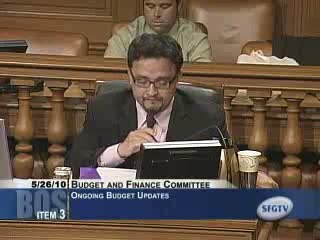
Chair John Avalos convened extended public comment and department testimony Wednesday as supervisors examined a possible mayoral proposal to contract out jail medical services. Mayor—s budget director Greg Wagner confirmed a proposal could appear in the mayor—s June 1 budget release, but many present urged caution.
Supervisor David Campos, who requested the hearing, framed the issue around documented failures in some privatized systems and the human stakes of any change. Campos cited national reporting and individual cases to illustrate risks, saying privatization could put vulnerable people—s lives at risk.
Public health experts and jail clinicians described San Francisco—s existing jail health services as integrated with community care and protective of high‑need populations. Dr. Elena Tutel, chief medical officer at San Quentin State Prison, told the committee she routinely sees patients from counties that use private contractors arrive at state facilities with untreated wounds, missed medications and little documentation — “This does not happen from San Francisco County,” she said, adding that earlier care reduces downstream state and county costs. Dr. Tutel and other clinicians said continuity of care for people living with HIV, serious mental illness and chronic disease depends on the current public‑sector arrangement.
Nurses, union representatives and community organizations described operational and public‑health consequences if the city severs jail medical services from the Department of Public Health. Suzanne Paradis of SEIU Local 1021 and jail nurses highlighted staffing‑ratio differences cited in submitted packets: Alameda County—s privatized model, they said, has far higher inmate‑to‑nurse ratios than San Francisco—s system, a difference they argued jeopardizes timely assessment and treatment.
Speakers from community organizations, including Forensic AIDS Project and the Forensic Case Project, stressed that jail‑based programs link incarcerated people to post‑release care and housing supports; several people who said they personally benefited from jail health services described how those links facilitated medical recovery and reentry. "Proactive HIV care and case finding prevent transmission and hospital admissions," a jail clinician told the committee.
The mayor—s budget director acknowledged the concerns and described the proposal as one option driven by the city—s fiscal gap. Greg Wagner said the mayor and Sheriff Michael Hennessey have discussed forms a proposal could take and that the sheriff planned to join supervisors to explain specifics. Wagner said the administration would work to ensure safeguards if any contracting option is advanced.
But Dr. Goldenson, who has administered San Francisco jail health services, told the board that commonly cited savings estimates are likely overstated. She explained that San Francisco—s multiple facilities, higher nurse staffing and integrated purchasing produce costs that are not easily reduced without eroding care. "Even if we flipped the RN/LVN ratio, we would still save less than a million dollars," she said, questioning published $6.5–$12 million savings figures.
Supervisors asked the controller—s office and mayor—s staff to produce comparative cost analyses, staffing‑mix scenarios, and the PUC/CityBuild data on placements and demographics. The committee paused formal action and scheduled further review; supervisors said they expected a full proposal in the mayor—s budget on June 1 and asked departmental leaders for quantitative comparisons before considering policy or ballot options.
The hearing underscored a central tension: short‑term budgetary pressure that produced the proposal versus concerns about public‑health outcomes, community partnerships and the costs of degraded care. The committee did not take final action; supervisors asked for analysis and said they would continue deliberations before any vote is held.