Get Full Government Meeting Transcripts, Videos, & Alerts Forever!
Get email alerts on the Civic Budget topic
No spam. Unsubscribe anytime.
Mayor's budget director outlines large deficit; hundreds of youth and community groups urge restoring DCYF funding
Summary
With a projected $482.7 million general fund gap and department targets of 20% plus contingency, the Budget & Finance committee heard a two-part afternoon session: (1) mayor's budget director Greg Wagner outlined options including a tentative labor agreement; (2) the youth commission presented priorities and dozens of organizations and young people testified in force urging restoration of after-school, employment and violence-prevention programs.
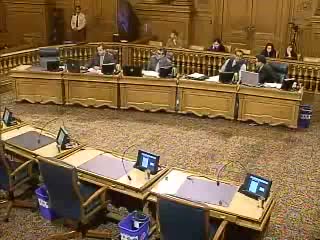
The Board's full Budget & Finance Committee convened in the afternoon for a sustained hearing on children, youth and family services after an extensive morning agenda. Greg Wagner, the mayor's budget director, said the city faces a general fund deficit of roughly $482.7 million driven by property tax declines, loss of one-time revenue and rising costs. Departments were asked to propose 20% reductions in discretionary general fund support plus a 10% contingency; that exercise alone would produce about $230 million in savings, Wagner said.
Wagner also described a tentative package negotiated with major city labor organizations (the Public Employees Committee) that, if ratified, would yield roughly $50 million a year in general-fund savings through a combination of furlough days, limited "minimum-staffing" days and changes in health-plan mechanics, plus protections and conditional layoffs tied to budget triggers. The administration said additional negotiations with other unions could add up to $18M more.
The committee then heard the youth commission's annual budget priorities: a $10/month youth lifeline Muni pass for eligible SFUSD students, reexamination of the School Resource Officer MOU, improved food access and summer lunch capacity, a school parcel tax to close SFUSD gaps, a health-education task force, expanded school-to-career pathways and completed items from the 2008 violence prevention plan. Commissioners urged prioritizing the most vulnerable youth.
Public comment followed for many hours. Dozens of community-based organizations, school staff, parents and hundreds of young people testified that proposed DCYF cuts would shutter proven programs in neighborhoods across the city. Testimony stressed: youth employment programs (MYEAP/MYEP, MAIP, YouthWorks and others) provide job skills and pathways to education; violence-prevention and case-management organizations reduce crime and hospital/justice costs; after-school tutoring programs (MEPI, Mission Learning Center, Our Kids First) raise achievement for English-language learners; and smaller local programs (Living Library, FCC's Kabatan, Homies, Huckleberry, Lyric, Larkin Street, many others) deliver services tailored to neighborhoods and highly vulnerable cohorts.
Speakers proposed alternatives to frontline cuts: ask large employers and developers to contribute; examine Recreation & Parks subsidies (Sharp Park) and potential transfer to federal management; look for overtime or high-management pay adjustments; and prioritize funding of prevention programs because downstream costs (hospital bills, incarceration) are far higher. Supervisors repeatedly asked the administration and DCYF for detailed comparisons showing current-year funding versus the proposed awards, and DCYF said it will supply line-by-line comparisons and additional detail about award changes.
The meeting closed with committee members noting the intensity of testimony and signaling they would press the mayor's office on policy choices, alternative revenue options and whether some municipal set-asides or departmental budgets could be reallocated rather than cutting community-based services.
What's next: DCYF and the mayor's budget office will provide requested comparative funding spreadsheets and program-level details; the full budget schedule remains on the June 1 city budget calendar. Community groups have promised continued advocacy ahead of final budget votes.
Sources: Mayor's Budget Office presentation; DCYF director presentation and RFP award summaries; dozens of public commenters representing community-based organizations, school staff, youth and parents at the April 20 Budget & Finance hearing.