Get Full Government Meeting Transcripts, Videos, & Alerts Forever!
Get email alerts on the Culture And Nightlife topic
No spam. Unsubscribe anytime.
Supervisors hear plans to protect LGBT nightlife, propose advisory committee and legacy options
Summary
Supervisors held a hearing on protecting LGBT nightlife and advancing an LGBT cultural district, heard presentations on economic impact and zoning tools, and the sponsor said legislation to create a community advisory committee is being drafted; the committee filed the hearing.
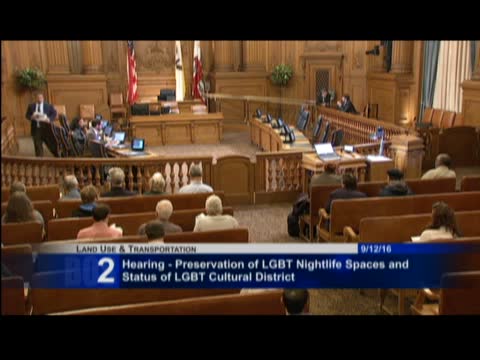
The Board of Supervisors committee held a hearing on steps the city can take to protect LGBT nightlife venues and to move forward with a long-promised LGBT cultural district.
Supervisor Weiner, sponsor of the hearing, described nightlife venues as "community spaces" and "safe spaces" and said many face development pressure that could force closures. He urged stronger political leadership to move the stalled cultural district process forward and proposed legislation to create a community advisory committee to advise city departments.
Ben Van Houten of the Office of Economic and Workforce Development described OEWD's Nightlife SF initiative and underscored nightlife's economic contribution: "$6,000,000,000 in spending by nightlife customers every year," he said, adding nightlife supports more than 60,000 jobs and contributes tens of millions in taxes. Van Houten described business assistance, small-business loan partnerships and a legacy business registry that can provide grants and recognition to longstanding venues.
Jocelyn Kane of the Entertainment Commission highlighted zoning constraints and a Central SoMa plan tool that encourages new nightlife space through rezoning; Tim Frey of the Planning Department said a cultural heritage district is best advanced through a stakeholder-led process and that staff will require facilitation resources before scheduling a stakeholder group.
Numerous public commenters — including venue owners, event organizers and developers — described preservation projects (Ringgold Alley improvements, a historic LGBT walk and private partnerships to preserve venues) and urged faster action to protect places such as the Stud. Supervisor Weiner said he is drafting legislation to create a community advisory committee; the committee then voted to file the hearing.