Get Full Government Meeting Transcripts, Videos, & Alerts Forever!
Get email alerts on the Campaign Finance topic
No spam. Unsubscribe anytime.
Rules committee hears presentations on 'Sunlight on Dark Money' ballot initiative
Summary
Supervisors and experts presented an anti–dark-money initiative that would close corporate contribution loopholes, bar certain developer-linked donations, and require expanded disclosure for independent expenditure committees; public commenters and ethics experts largely supported the move to put it before voters.
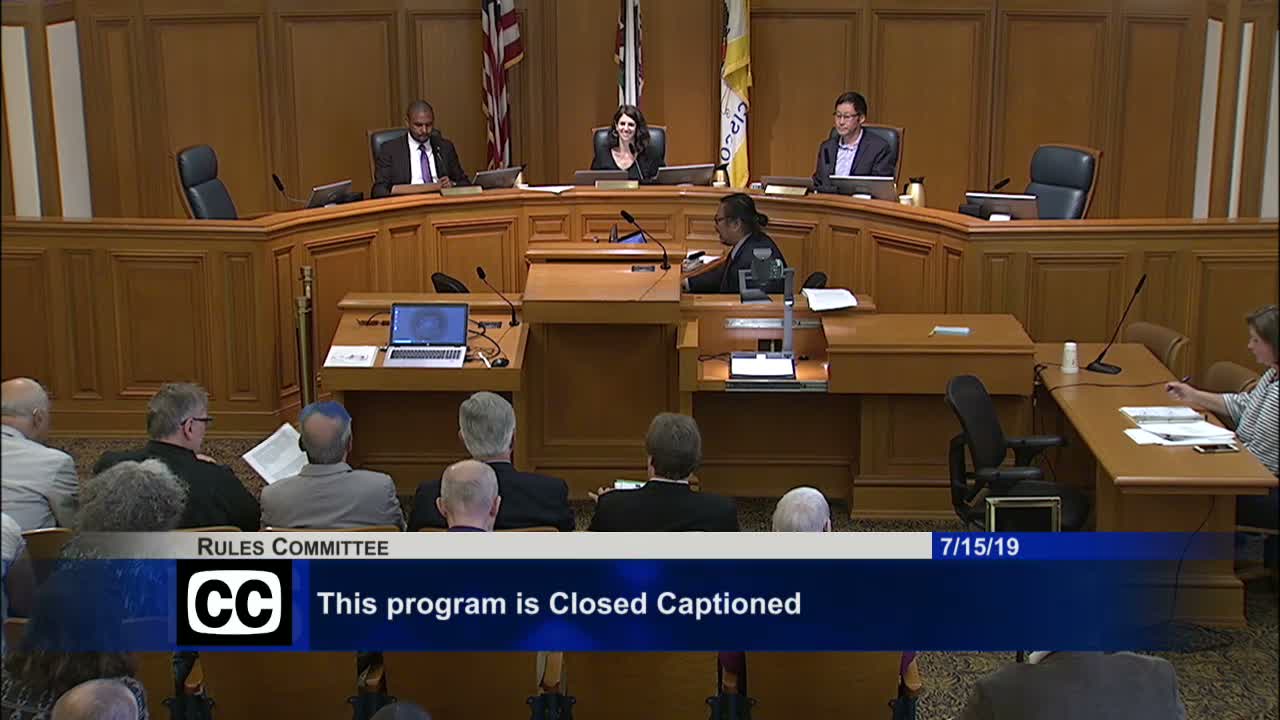
Supervisor Gordon Marr and ethics and legal experts presented the "Sunlight on Dark Money" ballot initiative during the Rules Committee meeting July 15, saying the measure would ban many corporate contributions, narrow pay‑to‑play opportunities for major developers and strengthen disclosure requirements for independent expenditure committees.
Supporters said the initiative has eight supervisor co‑sponsors and a string of endorsements from local organizations. "This is why I've made electoral reforms some of my first priorities in office," Supervisor Marr said, arguing the measure would address the influence of outside spending that, she said, distorted recent supervisor and mayoral races.
John Gollinger, who identified himself as an election‑law teacher and attorney, walked the committee through the measure’s three main components: broaden the campaign finance code’s definition of “corporation” to include LLCs and LLPs to close contribution loopholes; require independent expenditure committees to disclose dollar amounts and top donors (including donors to donor‑committees); and bar donations from individuals who have a $5,000,000 or greater financial interest in land‑use matters while a project is pending and for 12 months after approval.
Gollinger gave local examples he said illustrated the need for the measure, citing Progress San Francisco as a major funder of independent expenditures in recent supervisor and mayoral races and pointing to data he supplied on TMG Partners, which he said showed top executives making repeated contributions totaling $148,399 across dozens of campaigns.
Former Ethics Commission chair Peter Keane and multiple public commenters — including former supervisor and judge Quentin Kopp, advocacy groups and longtime campaign workers — urged the supervisors to approve sending the initiative to the ballot. "Voters deserve to know who's trying to buy their votes," Marr said.
Several public commenters described personal experience with large outside spending and unattributed mailers; one District 6 resident said volunteers collected glossy flyers used by outside committees and called the mailings “trash.” Advocates argued the measure would help level the playing field for candidates without deep-pocketed donors and provide voters better information about who funds political advertising.
Chair Ronan moved to file the informational hearing; the motion passed without objection. The committee filed the hearing and the measure will appear on the July 23 Board of Supervisors agenda for further action and is slated to go before voters in November if advanced.
The record included several supporting documents referenced at the hearing: a 2013 Demos report, a 2014 civil grand jury report urging Ethics Commission action, and a Brennan Center report on past local legislative efforts. Supporters said the measure is intended to be the strongest local dark money disclosure law in the country.
What happens next: the Rules Committee filed the hearing; the initiative’s placement on the November ballot depends on subsequent procedural steps by the Board of Supervisors and any required filings or validations.