Get Full Government Meeting Transcripts, Videos, & Alerts Forever!
Get email alerts on the Cultural District topic
No spam. Unsubscribe anytime.
Rules Committee advances Castro LGBTQ Cultural District ordinance with minor amendments
Summary
The Rules Committee advanced an ordinance to create the Castro Lesbian, Gay, Bisexual, Transgender and Queer Cultural District, adopting two minor amendments and hearing residents urge that hotel-tax funds prioritize small cultural grants over a large salaried position; the item will go to the Board on June 25.
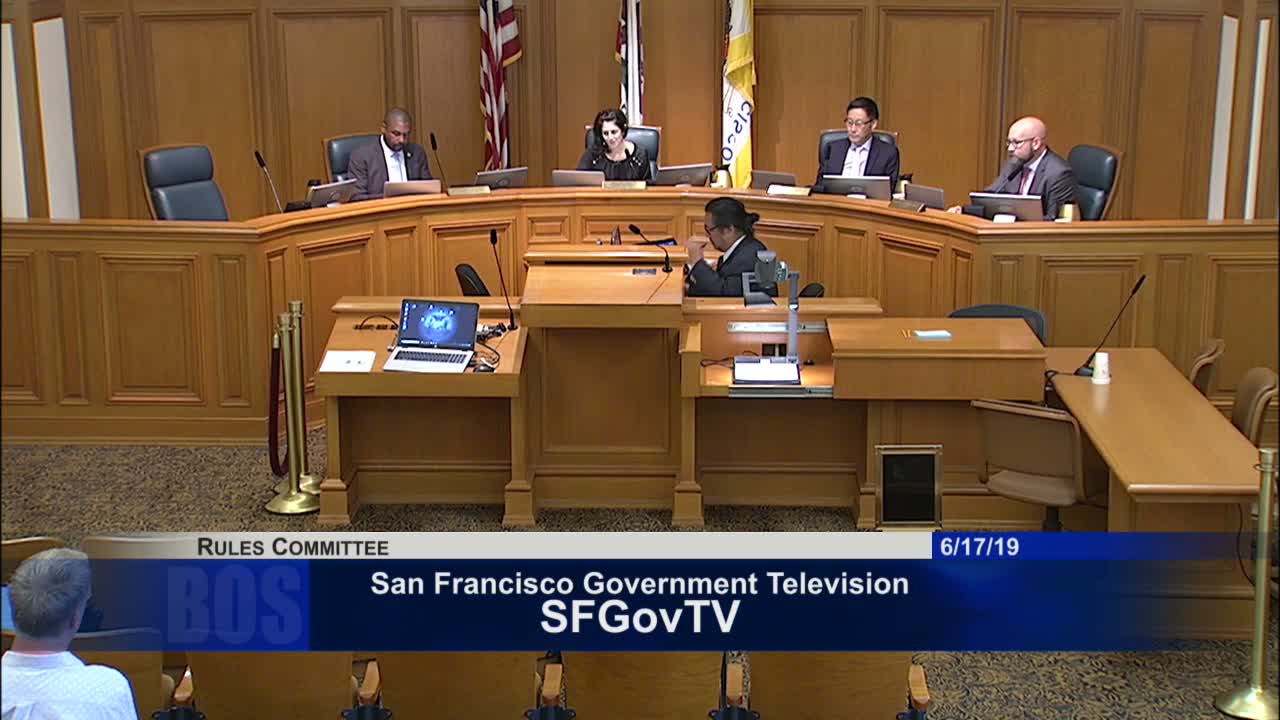
The San Francisco Board of Supervisors Rules Committee on June 17 advanced an ordinance to establish the Castro Lesbian, Gay, Bisexual, Transgender and Queer Cultural District, approving two author-proposed amendments and clearing the item to appear on the full Board agenda on June 25.
Supervisor Rafael Mandelmann, the ordinance’s author, told the committee the district is meant to preserve the Castro’s queer cultural history and to allow the neighborhood to access funding created by a recent ballot measure. "With the passage of Prop E last year and its $3,000,000 in dedicated funding for Cultural District, this ordinance will allow the Castro to access critical resources to support the small businesses, nonprofits, cultural institutions, and people that sustain the neighborhood," Mandelmann said.
Mandelmann described the district boundaries as the product of a community process and listed anchor institutions within the proposed district, including the San Francisco LGBT Center, Openhouse, and the Gay Men’s Chorus National LGBTQ Center for the Arts. He also introduced two minor amendments supported by advisory bodies: adding the Historic Preservation Commission as a named entity to assist the mayor’s office on the cultural history and housing/economic sustainability strategy report, and explicitly adding youth to language recognizing the Castro as a safe space for queer youth.
Public commenters welcomed the ordinance but urged the committee to make implementation choices that benefit cultural producers. Jesse Oliver Sanford, who chairs the Cultural District working group's governance committee, said while he supported passage "I'm concerned that the great intentions of Supervisor Ronan's legislation may be lost without your focus and leadership in the implementation phase." He urged that the district’s funds be directed towards small grants and programs rather than administrative payroll, saying, "We do not need a $100,000 annual salaried position taking up half of the cultural district set aside. Instead, we need those funds to go to benefit actual cultural producers ... small grants in the 15k or less range." Andrea Aiello, executive director of the Castro/Upper Market Community Benefit District, said the CBD "is wholeheartedly in support of this legislation" and that small grants could help revive arts activity and local economic vibrancy. David Hyman, a Castro ambassador, also urged the committee to pass the ordinance.
Chair Supervisor Hillary Ronan moved to accept the author’s verbal amendments; the motion passed "without objection," and committee members indicated the item would move forward "as amended." The clerk reminded the room that items acted upon at committee will appear on the Board of Supervisors agenda on June 25.
The committee adjourned after approving the item as amended. The next procedural step is consideration by the full Board of Supervisors; no roll-call vote tally was recorded at committee.