Get Full Government Meeting Transcripts, Videos, & Alerts Forever!
Get email alerts on the Housing topic
No spam. Unsubscribe anytime.
Committee advances ordinance to expand displaced‑tenant housing preference
Summary
The Rules Committee advanced an ordinance to extend San Francisco’s displaced‑tenant preference in affordable‑housing lotteries to people whose units lose contractual affordability, citing estimates that 1,500+ units could lose restrictions between 2021 and 2029; the item was amended and continued to June 10 for further work.
The San Francisco Board of Supervisors Rules Committee advanced an ordinance on June 3 that would expand the city’s displaced‑tenant housing preference to tenants whose affordable‑housing restrictions expire and whose rents would rise to 40% or more of household income.
Supervisor Brown, sponsor of the legislation, told the committee the change would broaden an existing preference that now applies mainly to tenants displaced by the Ellis Act, owner move‑in evictions or fire, and would help families displaced through the natural expiration of affordability covenants. “This legislation…expands the success of the displaced tenant preference,” Brown said during opening remarks.
Maria Benjamin of the Mayor’s Office of Housing and Community Development (MOHCD) presented program data to the committee, saying more than 1,000 applications for the displaced‑tenant preference have been filed since 2000 and that about 82% of applicants who apply qualify for certificates. Benjamin told supervisors that MOHCD identified about 15 HUD‑ or state‑funded buildings at risk of losing affordability—“which total over 1,500 units that will lose affordability between 2021 and 2029”—and approximately 45 inclusionary buildings totaling about 500 units also face expiration.
Benjamin and supervisors discussed practical eligibility questions, including giving tenants more time to use a certificate and allowing tenants to qualify before rents actually rise by documenting current market comparables. MOHCD said it can adjust eligibility timing so tenants can be qualified based on current income and market rent comparables in their building rather than waiting until eviction or an actual rent increase.
Committee members raised questions about HUD‑funded properties where the city lacks subsidy and therefore direct oversight. MOHCD staff said the agency is coordinating outreach and education with HUD and will use tools such as the recently passed Community Opportunity to Purchase Act to notify qualified nonprofits when publicly assisted properties are listed for sale.
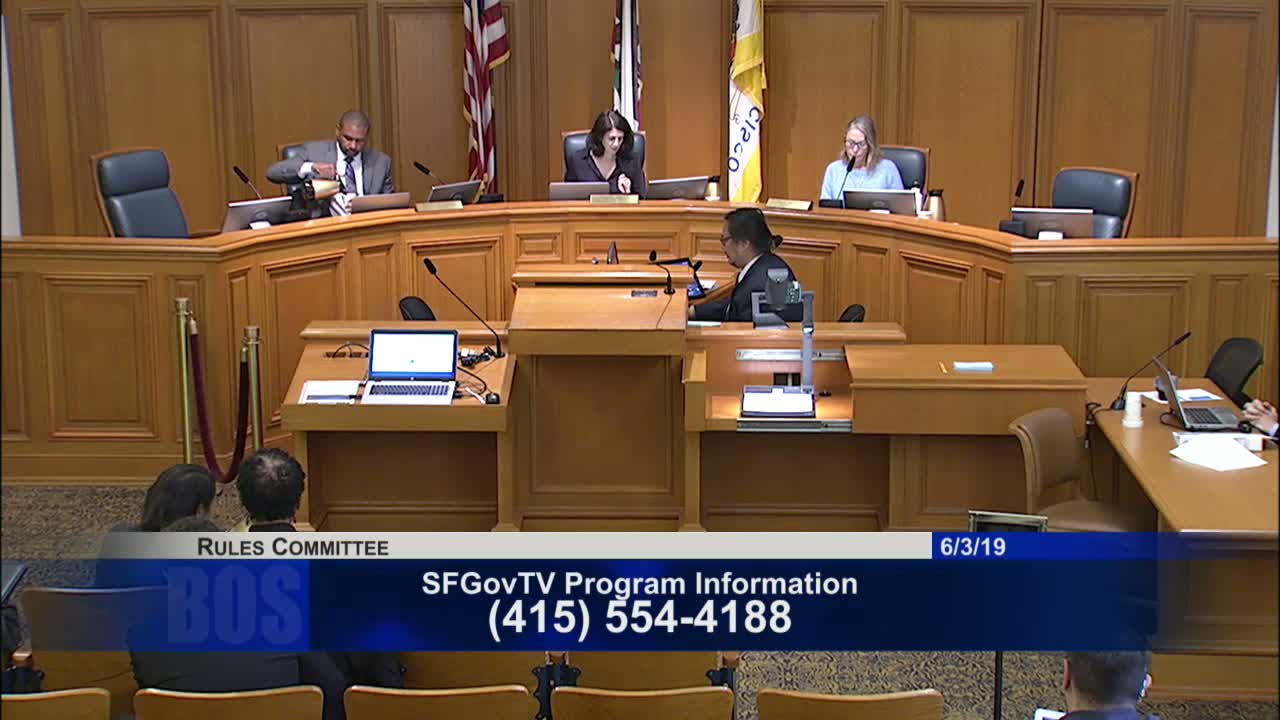
Chair Supervisor Hillary Ronan opened public comment and received none. Supervisor Shamone Walton moved to accept the amendments and continue the item to the committee’s next meeting; the motion passed without objection. The ordinance will return to the Rules Committee on June 10 and, if approved there, will appear on the Board of Supervisors agenda on June 11, 2019.
The committee did not adopt final language on all amendments at this hearing; staff and the sponsor said they will return with revised text reflecting timing and eligibility clarifications.