Get Full Government Meeting Transcripts, Videos, & Alerts Forever!
Get email alerts on the Nonprofit Financing topic
No spam. Unsubscribe anytime.
Supervisors debate $157,500 mortgage-reserve loan to LGBT Community Center; committee continues for two weeks
Summary
The committee considered a proposal to create a $157,500 mortgage-payment reserve from general fund reserves to secure better loan terms for the LGBT Community Centera measure supporters say saves interest and preserves an important community asset while budget staff warn of city risk and precedent; the item was continued for two weeks to review a business plan and alternatives.
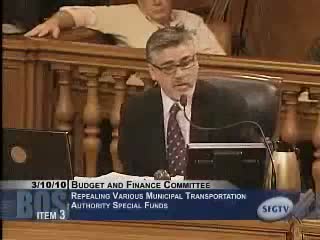
Supervisor Bevan Dufty introduced a paired ordinance and resolution seeking a one-year $157,500 loan appropriation from general fund reserves to create a mortgage-payment reserve account at First Republic Bank that would let the LGBT Community Center refinance a $3.2 million construction loan at better terms.
John Updike of the Real Estate Department explained the structure: the city would loan $157,500 (interest only at roughly 5% in the proposed draft) into a jointly controlled account so First Republic would feel comfortable offering the center a reduced rate and revised repayment schedule. The funds would sit untouched if the center makes its restructured payments; if the center misses a payment the city would have foreclosure and other remedies under the proposed loan terms.
The budget analyst, Mr. Rose, warned that the proposed mortgage-payment reserve could ultimately cost the city up to $1,023,750 if additional replenishments are required over five years, because the proposed initial appropriation could trigger future appropriations. The analyst noted First Republic had concerns about the borrowerand that the city's collateral protections are imperfect because of use restrictions on the property that could reduce market value in foreclosure.
Rebecca Rolfe, executive director of the center, and board co-chair James Williamson outlined programmatic cuts the center has already made, said it had submitted business plans to the bank and city, and argued a guarantee would avoid higher interest costs and preserve a unique community asset that provides services to thousands annually. Public commenters were strongly mixed: nonprofits and service providers urged support to protect programs; others warned about precedent and asked whether the bank should reduce principal.
After extended questioning on precedent, collateral, repayment schedules, business plans, and alternatives (including possible city-appointed board seats), the committee voted to continue the item for two weeks to allow the real estate department and the budget analyst to provide an inventory of city-invested properties, to review the center's business plan and to draft alternative structuring language including possibly changing the interest rate to the treasury rate.