Get Full Government Meeting Transcripts, Videos, & Alerts Forever!
Get email alerts on the Municipal Debt topic
No spam. Unsubscribe anytime.
Supervisors forward commercial paper reimbursement agreements after debate over 12% cap
Summary
The Budget & Finance Committee voted to forward a resolution authorizing reimbursement and dealer agreements for a $150 million commercial paper program and clarifying that a 12% reimbursement obligation is a statutory cap, not an assured payment. Staff said selected banks and a dealer were chosen through a competitive process.
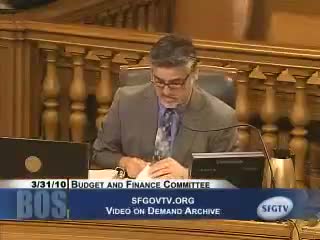
The Budget and Finance Committee on Tuesday recommended the Board of Supervisors approve reimbursement agreements and dealer agreements to operate a tax-exempt and taxable lease-revenue commercial paper program of up to $150 million.
Nadia, a department presenter, told the committee staff selected JP Morgan and U.S. Bank as letter-of-credit providers and named JP Morgan as the commercial paper dealer after a competitive process. She said the program lets the City draw short-term commercial paper to finance interim capital work, paying interest only on amounts drawn rather than issuing long-term bonds upfront. "The 12% you're agreeing to is a cap," she said, adding that proceeds would be used only for projects the board and mayor have already approved.
The Budget Analysis office told the committee the resolution would remove a previously approved Board requirement that capped the annual interest rate charged to the City at 12% in the reimbursement agreement and characterized the question as a Board-level policy issue.
Supervisors pressed staff on how likely it is that banks would have to make payments to investors and what market disruptions could cause rates to spike. Nadia said letters of credit serve as an automatic backstop: the bank pays investors and the City reimburses the bank on the same day. She described commercial paper maturities (one to 270 days) and a takeout-financing strategy to avoid rolling exposure during spikes.
Several supervisors voiced concern that shifting potential liability or payment obligations toward the City could in effect relieve banks of downside risk. "I'm against this simply because the commercial rates have been so low... it seems to defy the question that anything that exceeds 12%... is unlikely," Supervisor McQueen said. Staff replied that market practice and insurer/underwriter expectations influenced negotiations, that some banks would not agree to terms otherwise, and that the statutory 12% ceiling provided a negotiating anchor.
After brief public comment, Supervisor Sean Ellsborn moved to forward the resolution with a committee recommendation. A roll call recorded ayes from the mover and two other supervisors and a no vote from one supervisor; the committee recommendation passed and the item will go to the full Board for final action.
Next steps: The resolution will be considered by the full Board of Supervisors on the date listed on the Board agenda; staff and the Budget Analysis office characterized the decision as a policy-level choice for the Board.